Have you ever put on your active noise cancelling (ANC) headphones, expecting serene silence, only to be met with an unsettling sensation of pressure or fullness in your ears? This common experience, often described as an “eardrum suck” or a vacuum-like feeling, can transform your peaceful listening session into an uncomfortable ordeal. While the technology behind noise cancellation is designed to enhance your audio experience by eliminating distractions, it can sometimes introduce an unexpected physical sensation. This article delves into the intricate reasons why your noise cancelling headphones might feel like they’re creating pressure, exploring both the scientific mechanisms and practical solutions to help you achieve true listening comfort.
How Active Noise Cancellation (ANC) Works
To understand the pressure sensation, it’s essential to first grasp how active noise cancellation functions. Unlike passive noise isolation, which relies on physical barriers to block sound, ANC actively eliminates unwanted noise. It does this by utilizing tiny microphones to detect ambient sound waves, particularly those in the lower frequency range, like engine hums or air conditioning. The headphone’s internal processor then generates a precisely inverted sound wave—an “anti-noise” signal—that is 180 degrees out of phase with the incoming external noise. When these opposing sound waves meet, they effectively cancel each other out, resulting in a significant reduction of environmental noise.
This ingenious process, however, is the primary source of the perceived pressure. The interaction of these sound waves within the sealed environment of your ear canal subtly alters the air pressure. While it’s not typically a dramatic physical pressure difference like you might experience in an airplane cabin, your auditory system interprets these low-frequency sound wave manipulations as a change in pressure, leading to the “eardrum suck” sensation.
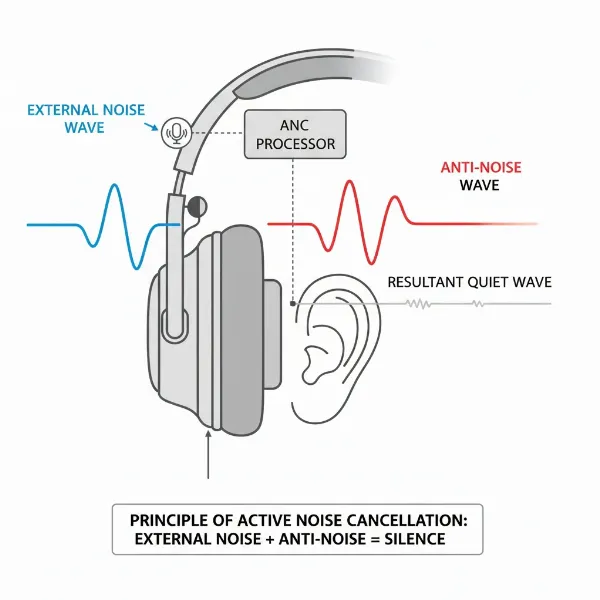 diagram showing active noise cancellation using sound waves
Why You Feel the Pressure: The Mechanisms Behind the Sensation
The feeling of pressure from noise cancelling headphones is a complex interplay between acoustic physics, auditory perception, and even your brain’s interpretation of silence. Several factors contribute to this unique sensation.
The “Eardrum Suck” Phenomenon
|
Our Picks for the Best headphone in 2026
As an Amazon Associate I earn from qualifying purchases.
|
||
| Num | Product | Action |
|---|---|---|
| 1 | Sony WH-CH720N Noise Canceling Wireless Headphones Bluetooth Over The Ear Headset with Microphone and Alexa Built-in, White New |

|
| 2 | Soundcore by Anker Q20i Hybrid Active Noise Cancelling Headphones, Wireless Over-Ear Bluetooth, 40H Long ANC Playtime, Hi-Res Audio, Big Bass, Customize via an App, Transparency Mode (White) |
|
| 3 | Amazon Basics On Ear Wired Computer Headset with Adjustable Microphone, 3.5mm Port or in-Line Control with USB-A Port, Foldable, Clear Sound, Small/Medium Size, Black |
|
| 4 | Sony WH-CH720N Noise Canceling Wireless Headphones Bluetooth Over The Ear Headset with Microphone, Pink |
|
| 5 | Amazon Basics Hybrid Active Noise Cancelling Headphones, 35 Hours Playtime with ANC on and 45 Hours with ANC Off, Wireless, Over Ear Comfortable Fit, Bluetooth, One Size, Black |
|
| 6 | Amazon Basics Bluetooth On-Ear Headphones Wireless with Microphone, Deep Bass, 35 Hour Playtime, Foldable, Collapsible, Portable Travel Friendly, Black |
|
| 7 | Soundcore by Anker Q20i Hybrid Active Noise Cancelling Headphones, Wireless Over-Ear Bluetooth, 40H Long ANC Playtime, Hi-Res Audio, Big Bass, Customize via an App, Transparency Mode |
|
| 8 | Soundcore by Anker Q20i Hybrid Active Noise Cancelling Headphones, Wireless Over-Ear Bluetooth, 40H Long ANC Playtime, Hi-Res Audio, Big Bass, Customize via an App, Transparency Mode |
|
| 9 | Sony WH-CH720N Noise Canceling Wireless Headphones Bluetooth Over The Ear Headset with Microphone and Alexa Built-in, Black New |
|
| 10 | Soundcore by Anker Q20i Hybrid Active Noise Cancelling Headphones, Wireless Over-Ear Bluetooth, 40H Long ANC Playtime, Hi-Res Audio, Big Bass, Customize via an App, Transparency Mode (Pink) |
|
The most direct cause of the pressure feeling is the way ANC technology manipulates the acoustic environment inside your ear. By introducing inverse sound waves, ANC headphones create a zone of quiet by canceling out external noise. This cancellation affects the air pressure dynamics within your ear canal, leading to what many describe as an “eardrum suck.” Your eardrums react to this subtle, yet constant, manipulation of pressure, giving you the impression of a sealed environment or even a slight vacuum. This sensation is a direct result of the low-frequency sound waves generated by the ANC system.
Your Brain’s Auditory Mismatch
Beyond the physical mechanics, your brain plays a significant role in how you perceive this pressure. Our auditory system is constantly on alert, processing a myriad of background noises, even those we don’t consciously notice. When ANC technology abruptly removes these expected ambient sounds, especially low frequencies, it creates an unusual auditory mismatch. Your brain might interpret this sudden “loss” of expected auditory input as something being wrong with your ears, triggering a pressure sensation as a protective or warning response. This is akin to how individuals with hearing aids might report a similar feeling when their devices are removed, as the brain adjusts to the altered soundscape.
Vestibular System Interaction and Disorientation
The impact of ANC can extend beyond just your eardrums, potentially influencing your vestibular system, which is responsible for balance and spatial orientation. The sound waves generated by ANC, particularly very low-frequency vibrations that your ears can still register even if not consciously heard, can stimulate the balance receptors in your inner ear. When these vibrations falsely signal head movement, but your eyes report that you are stationary, your brain receives conflicting signals. This sensory mismatch can lead to feelings of disequilibrium, dizziness, mild headaches, or even a sense of disorientation, particularly during prolonged use. For some individuals, especially those with pre-existing conditions like Meniere’s disease, these effects can be more pronounced.
“ANC doesn’t just block sound—it manipulates the auditory environment in ways that can disrupt vestibular balance,” explains Dr. Lena Torres, an auditory neurologist at Boston Hearing Institute.
Beyond ANC: Other Factors Contributing to Ear Discomfort
While the active noise cancellation mechanism is the primary culprit behind the pressure sensation, other factors related to headphone design and individual physiology can also contribute to overall ear discomfort.
Headphone Fit and Clamping Force
The physical design of your headphones, especially over-ear models, plays a crucial role in comfort and how pressure is perceived. For ANC to be most effective, a good seal around the ears is necessary to block out as much external noise as possible. This often means that over-ear headphones exert a certain amount of “clamping force” on your head. If this force is too strong, or if the earcups don’t fit well, it can lead to physical pressure on your ears and head, which might be mistaken for, or exacerbate, the pressure created by ANC. Similarly, for in-ear headphones, a poor fit with ill-suited ear tips can create an uncomfortable seal or push too deeply into the ear canal, causing discomfort.
Individual Sensitivity
Not everyone experiences the same degree of pressure or discomfort from noise cancelling headphones. Individual sensitivity to changes in air pressure and auditory input varies widely. Factors such as the unique anatomy of your ear canals, the efficiency of your Eustachian tubes (which equalize ear pressure), or even conditions like chronic sinus issues can influence how strongly you perceive the ANC effect. Research indicates that approximately 35% of first-time ANC headphone users report experiencing ear pressure shortly after use, but good news, about 78% find relief within two weeks as their bodies adjust to the technology.
Alleviating the Pressure: Practical Solutions and Tips
Fortunately, if you’re experiencing uncomfortable pressure from your noise cancelling headphones, there are several effective strategies you can employ to mitigate the sensation and enhance your listening comfort.
Ensure a Proper Fit
A well-fitting pair of headphones is foundational to both effective noise cancellation and comfort.
- Over-ear headphones: Make sure the earcups fully enclose your ears without pinching or pressing uncomfortably. Adjust the headband to ensure the headphones rest firmly but not too tightly on your head. The goal is a secure seal without excessive clamping force.
- In-ear headphones (earbuds): Experiment with different sizes of ear tips that come with your earbuds. A snug but comfortable seal is crucial. The right tips will provide optimal passive noise isolation, which can reduce the workload on the ANC and potentially lessen the pressure.
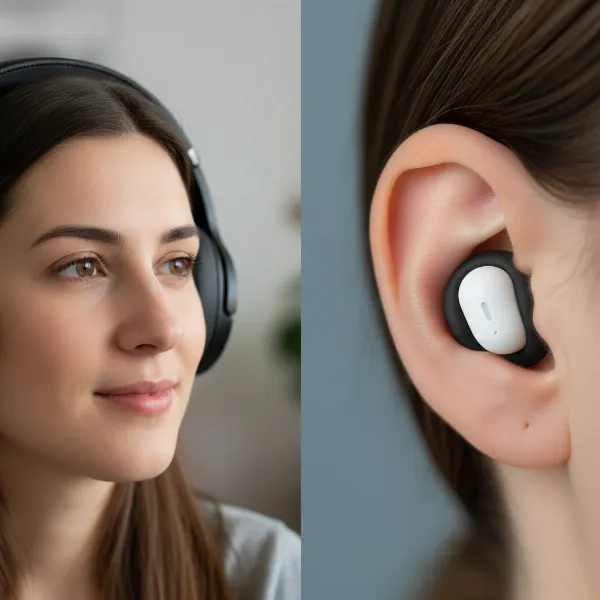 two images showing correct fit for over-ear and in-ear headphones
Take Regular Breaks
Just as prolonged screen time can cause eye strain, continuous use of ANC headphones can lead to ear fatigue. Make it a habit to take regular breaks, especially during extended listening sessions. Removing your headphones for a few minutes allows your ears to reacclimate to the natural ambient sound environment. A good guideline is the “60/60 rule”: listen at no more than 60% volume for up to 60 minutes before taking a break.
Adjust ANC Levels
Many premium noise cancelling headphones offer adjustable ANC intensity settings. If your headphones have this feature, try lowering the noise cancellation strength. Reducing the aggressiveness of the ANC can often alleviate the pressure sensation while still providing a noticeable reduction in ambient noise. Some models even have adaptive ANC that automatically adjusts to your environment, which can also help.
Use Transparency Mode
Modern ANC headsets often include a “Transparency Mode” or “Ambient Sound Mode.” This feature allows some external sounds to pass through, blending them with your audio. By doing so, it reduces the sensory mismatch that your brain might experience with complete silence, making the listening experience feel more natural and less pressure-inducing. Utilize this mode when you don’t need absolute silence or when you want to be more aware of your surroundings.
Equalize Ear Pressure
If you feel a pressure differential similar to what you experience on an airplane, you can try methods to equalize your ear pressure.
- “Pop” your ears: Yawning, swallowing, or gently performing the Valsalva maneuver (pinching your nose, closing your mouth, and gently trying to exhale) can help open your Eustachian tubes and equalize pressure. This is particularly useful if you feel a physical pressure build-up.
Consider Different ANC Types
There are different types of ANC technology: feedforward, feedback, and hybrid. Each can affect the perceived pressure differently. Some users find hybrid ANC, which uses microphones both inside and outside the earcup, to offer a more balanced noise cancellation with less pressure. If the issue persists, exploring headphones with different ANC implementations might be beneficial.
When to Seek Professional Advice
While the pressure sensation from noise cancelling headphones is typically harmless and often temporary, it’s important to be aware of your body’s signals. If you experience persistent ear pain, severe dizziness, tinnitus (ringing in the ears), or any other concerning symptoms that do not subside after taking breaks or trying the above solutions, it is advisable to consult a medical professional. An audiologist or ENT specialist can rule out any underlying ear conditions and offer personalized advice.
Conclusion
The pressure feeling associated with noise cancelling headphones is a fascinating intersection of advanced audio technology and human physiology. It’s often a result of how active noise cancellation alters the air pressure within your ear canal and how your brain processes the sudden absence of ambient sound. By understanding these mechanisms, from the “eardrum suck” phenomenon to the brain’s auditory mismatch and even the interaction with your vestibular system, you can better manage this common discomfort. With proper fit, regular breaks, and smart use of your headphone’s features like adjustable ANC and transparency modes, you can significantly alleviate the pressure and fully enjoy the immersive, quiet listening experience that noise cancelling headphones are designed to provide. Don’t let a minor discomfort deter you from the benefits of silence; empower yourself with knowledge and simple adjustments. What strategies have you found most effective in combating headphone pressure?
Frequently Asked Questions
Is the pressure from noise cancelling headphones harmful?
Generally, the pressure sensation from noise cancelling headphones is not harmful and is primarily a perceived effect rather than a dangerous physical change. It’s often temporary and many users adjust to it over time. However, if you experience persistent pain, severe dizziness, or tinnitus, it’s advisable to consult a healthcare professional.
Can noise cancelling headphones cause headaches or dizziness?
Yes, for some individuals, the manipulation of sound waves, especially very low frequencies, can stimulate the inner ear’s balance receptors. This can lead to a sensory mismatch with visual input, potentially causing feelings of dizziness, disorientation, or mild headaches. Taking breaks and adjusting ANC levels can often help.
How long does it take to get used to noise cancelling headphones?
Individual adjustment times vary, but research suggests that many first-time users who experience ear pressure find relief within two weeks as their bodies and brains adapt to the unique auditory environment created by ANC technology. Consistent use and taking short breaks can aid this acclimatization process.
What is “eardrum suck” and why does it happen?
“Eardrum suck” describes the vacuum-like pressure sensation many feel with ANC headphones. It occurs because active noise cancellation generates opposing sound waves that subtly alter the air pressure within your sealed ear canal. Your eardrums react to these fluctuations, creating the perception of pressure.
Do all noise cancelling headphones cause this pressure?
The degree of pressure sensation can vary significantly between different models and brands of noise cancelling headphones, as well as individual sensitivity. Factors like the specific ANC technology used (feedforward, feedback, or hybrid) and the quality of the algorithm can influence how pronounced the pressure feels.