For any dedicated audio enthusiast, the journey to impeccable sound quality is a continuous exploration, and choosing the right headphone amplifier is a critical stop along the way. Amplifiers are the heart of your audio chain, taking a low-level audio signal and boosting it to power your headphones. This decision often comes down to a fundamental choice: the classic allure of tube amplifiers or the modern precision of solid-state amplifiers. Each offers a distinctly different listening experience, impacting everything from the warmth of your vocals to the crispness of your cymbals. Understanding these differences is key to unlocking the true potential of your headphones and discovering the sound that truly resonates with you.
Understanding Headphone Amplifiers
At its core, a headphone amplifier’s job is to take the weak electrical signal from your audio source (like a DAC, phone, or computer) and increase its power and voltage to properly drive your headphones. Without adequate amplification, many high-fidelity headphones, especially those with higher impedance or lower sensitivity, cannot perform their best, resulting in low volume, poor dynamics, and a lack of detail. The amplifier acts as the bridge, ensuring your headphones receive a clean, robust signal to reproduce music accurately and dynamically.
Tube Amplifiers: The Warmth of Tradition
|
Our Picks for the Best headphone in 2026
As an Amazon Associate I earn from qualifying purchases.
|
||
| Num | Product | Action |
|---|---|---|
| 1 | Amazon Basics On Ear Wired Computer Headset with Adjustable Microphone, 3.5mm Port or in-Line Control with USB-A Port, Foldable, Clear Sound, Small/Medium Size, Black |

|
| 2 | Amazon Basics Bluetooth On-Ear Headphones Wireless with Microphone, Deep Bass, 35 Hour Playtime, Foldable, Collapsible, Portable Travel Friendly, Black |
|
| 3 | Sony WH-CH720N Noise Canceling Wireless Headphones Bluetooth Over The Ear Headset with Microphone and Alexa Built-in, Black New |
|
| 4 | Soundcore by Anker Q20i Hybrid Active Noise Cancelling Headphones, Wireless Over-Ear Bluetooth, 40H Long ANC Playtime, Hi-Res Audio, Big Bass, Customize via an App, Transparency Mode (White) |
|
| 5 | Soundcore by Anker Q20i Hybrid Active Noise Cancelling Headphones, Wireless Over-Ear Bluetooth, 40H Long ANC Playtime, Hi-Res Audio, Big Bass, Customize via an App, Transparency Mode (Pink) |
|
| 6 | Soundcore by Anker Q20i Hybrid Active Noise Cancelling Headphones, Wireless Over-Ear Bluetooth, 40H Long ANC Playtime, Hi-Res Audio, Big Bass, Customize via an App, Transparency Mode |
|
| 7 | Sony WH-CH720N Noise Canceling Wireless Headphones Bluetooth Over The Ear Headset with Microphone and Alexa Built-in, White New |
|
| 8 | Sony WH-CH720N Noise Canceling Wireless Headphones Bluetooth Over The Ear Headset with Microphone, Pink |
|
| 9 | Amazon Basics Hybrid Active Noise Cancelling Headphones, 35 Hours Playtime with ANC on and 45 Hours with ANC Off, Wireless, Over Ear Comfortable Fit, Bluetooth, One Size, Black |
|
| 10 | Soundcore by Anker Q20i Hybrid Active Noise Cancelling Headphones, Wireless Over-Ear Bluetooth, 40H Long ANC Playtime, Hi-Res Audio, Big Bass, Customize via an App, Transparency Mode |
|
Tube amplifiers, often called valve amplifiers, utilize vacuum tubes to amplify audio signals. These glass components contain filaments that, when heated, emit electrons through a vacuum, creating the amplified sound. This analog process inherently introduces a subtle, pleasing form of distortion, often referred to as “harmonic distortion,” which shapes the amplifier’s distinctive sound signature.
The characteristic “tube sound” is frequently described as warm, musical, and full-bodied. Listeners often report a smoother treble response, enhanced vocal presence, and a more expansive, three-dimensional soundstage that makes instruments feel more distinct and alive. This euphoric spatial energy can create an emotionally involving listening experience, particularly appreciated with genres like jazz, classical, and rock, or when listening to vinyl. The natural compression and organic response of tubes can make digital recordings sound less sterile and more vibrant. Tube amps also boast a unique aesthetic appeal, with their glowing tubes and retro design, becoming a visual centerpiece in any audio setup. A significant benefit for enthusiasts is “tube rolling,” the practice of swapping out different tubes to subtly alter the amplifier’s sound signature, allowing for personalized fine-tuning.
However, tube amplifiers come with their considerations. They typically have a higher initial cost, and their vacuum tubes have a finite lifespan (ranging from 500 to 2,000 hours), requiring periodic and sometimes costly replacements. Tube amps generate considerable heat, are generally bulkier, and the glass tubes are fragile, demanding careful handling. They also require a warm-up period, often around 30 minutes, to perform optimally. While excellent with high-impedance dynamic headphones like certain Sennheiser models, some tube designs, especially those without output transformers, may struggle with low-impedance or highly sensitive headphones, potentially introducing a noticeable noise floor or hum.
Solid State Amplifiers: Precision and Power
Solid-state amplifiers, in contrast, use semiconductor components like transistors to amplify audio signals. These devices rely on the movement of electrons within a solid material, resulting in a cleaner, more direct amplification process. This design prioritizes accuracy and transparency, aiming to reproduce the audio signal with minimal alteration.
Solid-state amps are renowned for their accurate, neutral, and detailed sound reproduction. They deliver a clean, transparent audio output that many listeners appreciate for its precision and clarity across the entire frequency spectrum. You can expect tight, punchy bass, clear mids, and detailed highs, often accompanied by superior soundstage depth. This “clinical accuracy” is particularly well-suited for genres demanding precision and clarity, such as electronic music, hip-hop, and modern productions where every subtle detail is intended to be heard exactly as recorded. Their consistent performance makes them highly versatile for all music types.
One of the most significant advantages of solid-state amplifiers is their low maintenance requirements. Lacking vacuum tubes, there’s no need for periodic replacements, contributing to their overall reliability and longevity. They are generally more compact, lighter, and more impact-resistant than tube amps, making them ideal for smaller spaces or transport. Solid-state amps are also typically more affordable, both in initial purchase and long-term ownership, with minimal heat generation. While offering less sonic customization than tube rolling, some solid-state models allow for adjustable settings or swappable op-amps for minor sound adjustments.
Key Factors When Choosing Your Headphone Amplifier
Selecting between a tube and solid-state amplifier isn’t a matter of one being inherently “better” than the other; rather, it’s about matching the amplifier to your personal preferences, your headphones, and your listening environment.
Sound Character: Warmth vs. Accuracy
Your ideal sound signature is the most crucial factor. Do you crave the rich, warm, and slightly colored sound of a tube amplifier, which can add a “musicality” and “euphoric” quality, making the listening experience feel more intimate and alive? Or do you prioritize the analytical, transparent, and accurate reproduction offered by a solid-state amplifier, where the goal is to hear the music exactly as the artist intended, with every detail rendered precisely? There’s no right or wrong answer; it’s a deeply personal choice.
Headphone Pairing: Impedance and Sensitivity
The type of headphones you own, or plan to own, plays a significant role.
- Dynamic Driver Headphones: Many high-impedance dynamic headphones, such as those from Sennheiser (e.g., HD 6XX, HD 800S), are often said to synergize exceptionally well with tube amplifiers. The higher voltage output of tubes can drive these headphones effectively, enhancing their perceived warmth and soundstage.
- Planar Magnetic Headphones: These headphones typically demand significant current for optimal performance. While specialized transformer-coupled tube amps can drive them, solid-state amplifiers are generally preferred for their ability to deliver high power and precise control, ensuring planar magnetics perform at their best with tight bass and clear dynamics.
- Sensitive/Low-Impedance Headphones: Highly sensitive or low-impedance headphones can sometimes reveal the inherent noise floor of tube amplifiers, leading to an audible hum or hiss. Solid-state amplifiers, with their typically lower output impedance and cleaner signal, are usually a safer and more versatile choice for these types of headphones.
Maintenance and Longevity
Consider your willingness to engage in amplifier maintenance. Tube amplifiers, with their fragile glass components and limited tube lifespan, require more attention and periodic replacements, akin to changing a car’s oil. They also run hotter. Solid-state amplifiers, on the other hand, are largely “set it and forget it” devices, built for long-term reliability with minimal upkeep and running cooler.
Budget Considerations
Initial cost and long-term ownership expenses differ notably. Solid-state amplifiers generally have a lower entry price and no recurring costs for component replacement. Tube amplifiers, while offering compelling sonic qualities, demand a higher initial investment and an ongoing budget for replacement tubes, especially if you indulge in “tube rolling” with premium NOS (New Old Stock) tubes.
Aesthetic and Space
The visual appeal and physical footprint are also practical considerations. Tube amps often have a larger, more imposing presence with their glowing tubes, creating a distinct retro or high-end look. Solid-state amps tend to be more discreet, compact, and modern in design, fitting more easily into various desk or shelving setups.
Comparison Table: Tube vs. Solid State Headphone Amps
| Feature | Tube Amplifiers | Solid State Amplifiers |
|---|---|---|
| Sound Signature | Warm, musical, euphonic, rich harmonics, smooth | Accurate, transparent, neutral, detailed, precise |
| Distortion | Pleasant (even-order), rises gently with output | Very low, clean until clipping |
| Maintenance | High (tube replacement 500-2000 hrs) | Low (virtually maintenance-free) |
| Initial Cost | Higher (starting $300-$500+) | Lower (starting $100-$300) |
| Long-Term Cost | Ongoing tube replacement, potential tube rolling | Minimal |
| Size/Weight | Bulky, heavier | Compact, lightweight |
| Heat Output | Significant | Minimal |
| Durability | Fragile (glass tubes, delicate components) | Robust, impact-resistant, less prone to component failure |
| Customization | High (tube rolling for sound alteration) | Limited (some settings, swappable op-amps) |
| Best For | High-impedance dynamic headphones, classical, jazz, rock, vinyl | All headphones, especially low-impedance, planar magnetics, EDM, modern genres |
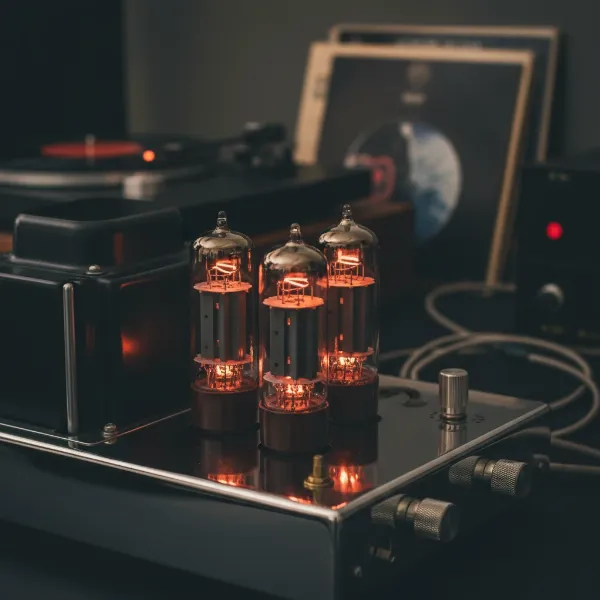 A vintage tube amplifier with its warm, orange-glowing vacuum tubes against a dark background, highlighting its aesthetic appeal.
Buying Guide: Choosing the Right Headphone Amplifier
Navigating the world of headphone amplifiers can be exciting but also daunting. Here’s a structured approach to help you make an informed decision:
Define Your Listening Priorities
Start by deeply considering what you value most in your audio experience. What genres of music do you primarily listen to? Do you prefer an emotionally engaging, “colored” sound, or do you seek absolute fidelity and transparency? Will this be for critical listening sessions, casual enjoyment, gaming, or studio work? Your primary use case will heavily influence the best amplifier choice. For instance, if you mainly listen to EDM and crave impactful bass and crystal-clear highs, a transparent solid-state amplifier might be your ideal partner. Conversely, if you spend hours with classical compositions or jazz, appreciating a more natural and mellow presentation, a tube amp could be more appealing.
Understand Your Headphones
The synergy between your headphones and amplifier is paramount. Research your headphones’ specifications: their impedance (measured in ohms) and sensitivity (measured in dB/mW or dB/V). High-impedance headphones often benefit from the higher voltage swing of tube amps, while low-impedance, sensitive headphones typically require an amp with very low output impedance to avoid frequency response anomalies and audible hiss, a domain where solid-state amps usually excel. Planar magnetic headphones generally demand a high-current output for optimal performance, which solid-state designs often provide more readily.
Set Your Budget
Be realistic about what you’re willing to spend. Remember to account for not only the initial purchase price but also potential long-term costs. For tube amplifiers, this includes the price of replacement tubes, which can vary significantly depending on type and rarity. Solid-state options generally offer a more predictable financial commitment over their lifespan. You can find excellent amplifiers in both categories across various price points, but typically, tube amps require a higher initial investment for quality performance.
Research and Read Reviews
Dive into comprehensive reviews from reputable audio publications and user forums. Pay close attention to reviews that discuss amplifier pairings with headphones similar to yours. Look for insights into specific sound characteristics, build quality, reliability, and any reported issues. Keep an eye out for mentions of output impedance, noise floor, and how well the amp handles different headphone sensitivities. Community discussions, like those on dedicated audiophile forums, often provide invaluable real-world experiences.
Consider a Hybrid Approach
If you find yourself torn between the distinct characteristics of tube and solid-state, a hybrid amplifier might be your perfect compromise. These units typically combine a tube-based preamp stage for that characteristic warmth and musicality with a solid-state output stage for power, control, and reliability. This blend can offer a “best of both worlds” scenario, providing a touch of tube magic without all the maintenance demands or potential compatibility issues of a full tube amplifier.
Audition If Possible
The most effective way to choose an amplifier is to listen to it yourself. If possible, visit an audio store that allows you to audition different tube and solid-state amplifiers with your own headphones. Your ears are the ultimate judge. What sounds “warm” to one person might sound “dull” to another, and what’s “accurate” to some might be “sterile” to others. Personal listening will give you an undeniable sense of what truly enhances your music.
Conclusion
The debate between tube and solid-state amplifiers for headphones is a rich and ongoing conversation in the audiophile community, largely because neither is universally “better.” Tube amplifiers offer a romantic, warm, and musical sound, often enhancing the perceived depth and emotional connection to music, but come with higher maintenance and cost. Solid-state amplifiers, on the other hand, provide unparalleled accuracy, detail, and reliability, making them versatile workhorses for a wide range of headphones and genres.
Ultimately, your choice hinges on your personal sonic preferences, the characteristics of your headphones, your budget, and your willingness to engage with maintenance. Whether you seek the euphoric glow of tubes or the pristine clarity of solid-state, a thoughtfully chosen amplifier will elevate your headphone listening experience to new heights. Which amplifier type calls to your ears the most?
Frequently Asked Questions
What is “tube rolling”?
Tube rolling refers to the practice of swapping out the vacuum tubes in an amplifier with different models or brands to subtly alter its sound signature. Different tubes can impart varying degrees of warmth, detail, or soundstage, allowing enthusiasts to customize their listening experience to their precise preferences.
Can I use a tube amp with any headphones?
While many tube amps are designed to work with a range of headphones, they often pair best with high-impedance dynamic headphones. Low-impedance or very sensitive headphones may not be ideal partners for some tube amps due to potential issues like a noticeable noise floor, hum, or undesirable frequency response interactions caused by high output impedance.
Do solid-state amps sound “cold” or “harsh”?
Not necessarily. While some early or poorly designed solid-state amplifiers could be perceived as cold or analytical, modern high-quality solid-state amps are designed for extreme neutrality and transparency, aiming to reproduce the audio signal without adding their own sonic character. The perception of “coldness” is often a preference for the added warmth that tubes provide, rather than an inherent flaw in solid-state design.
How long do vacuum tubes last?
The lifespan of vacuum tubes varies widely depending on the tube type, usage, and manufacturer, typically ranging from 500 to 2,000 hours of operation. Power tubes often have a shorter lifespan than smaller preamp tubes. Factors like how often the amp is turned on and off, and running conditions (e.g., heat), can also influence their longevity.
Are hybrid amps a good compromise?
Hybrid amplifiers, which combine a tube input stage with a solid-state output stage, can be an excellent compromise. They aim to deliver the desirable warmth and harmonic richness of tubes while retaining the power, control, and reliability of solid-state designs. This can be a great option for listeners who want a touch of the “tube sound” without the full maintenance demands or potential impedance matching complexities of a purely tube-driven amplifier.