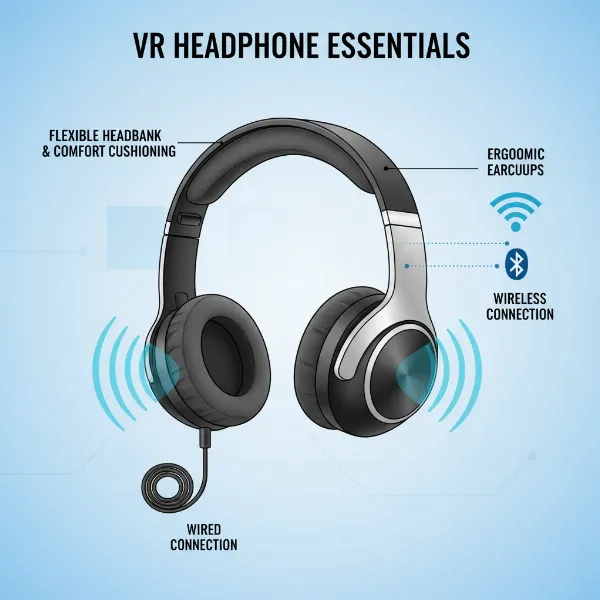
You’ve just unboxed a brand-new pair of headphones, eager to immerse yourself in pristine audio. But then you encounter a common audiophile ritual: “headphone burn-in.” This intriguing practice suggests that your new cans aren’t sounding their best straight out of the box and need a period of “breaking in” to reach their full sonic potential. Is this a crucial step for optimal sound, or merely a persistent myth in the audiophile world? This article delves into the heart of the headphone burn-in debate, exploring the claims, the science, and whether it’s a practice worth your time.
The Headphone Burn-In Debate: Myth vs. Reality
The concept of headphone burn-in is a topic that sparks passionate discussions among audio enthusiasts. On one side, many audiophiles firmly believe it’s a necessary process to unlock the true sound quality of their new headphones. They argue that components like speaker diaphragms are stiff when new and need to be “exercised” through continuous play to become more flexible. This loosening, they claim, results in improved bass response, clearer mid-range frequencies, and smoother, less harsh treble. The analogy often drawn is to breaking in a new pair of shoes or a car engine – mechanical parts need time to settle and perform optimally. Proponents suggest that after a specific number of hours, typically ranging from 40 to over 200, the headphones transform, delivering a more natural and balanced sound.
Conversely, a substantial body of scientific and objective analysis largely dismisses headphone burn-in as a myth, particularly regarding significant physical changes to the drivers. Skeptics point to a lack of conclusive scientific evidence or measurable physical alterations in headphone drivers that would lead to audible improvements. They argue that modern headphone drivers are precision-engineered devices, factory-tested to perform optimally from day one. Any perceived changes in sound, they suggest, are predominantly due to psychological phenomena such as “brain burn-in” or the placebo effect. Our brains are incredibly adept at adapting to new sound signatures, and the act of expecting an improvement can indeed lead us to believe one exists. Furthermore, small physical changes that do occur over time in materials are often minimal and may not necessarily lead to a “better” sound, and could even cause degradation.
 A pair of headphones playing music unattended, with a subtle glow around the earcups, illustrating the concept of headphone burn-in with a touch of mystery.
Understanding the Factors Behind Perceived Sound Changes
While the physical “burn-in” of headphone drivers remains a contentious issue, there are other, more tangible factors that contribute to how headphones sound and feel over time. Distinguishing between these elements is key to understanding the full picture.
Driver “Break-in” – The Disputed Physical Change
|
Our Picks for the Best headphone in 2026
As an Amazon Associate I earn from qualifying purchases.
|
||
| Num | Product | Action |
|---|---|---|
| 1 | Sony WH-CH720N Noise Canceling Wireless Headphones Bluetooth Over The Ear Headset with Microphone and Alexa Built-in, Black New |

|
| 2 | TAGRY Hybrid Active Noise Cancelling Bluetooth Headphones 100H Playtime Wireless Over Ear Headphone with Fast Charging Hi-Res Audio Headsets Comfort Earcups for Commute Travel Office Phone PC Black |
|
| 3 | Soundcore by Anker Q20i Hybrid Active Noise Cancelling Headphones, Wireless Over-Ear Bluetooth, 40H Long ANC Playtime, Hi-Res Audio, Big Bass, Customize via an App, Transparency Mode (White) |
|
| 4 | Hybrid Active Noise Cancelling Bluetooth 6.0 Headphones 120H Playtime 6 ENC Clear Call Mic, Over Ear Headphones Wireless with Hi-Res Audio Comfort Earcup Low Latency ANC Headphone for Travel Workout |
|
| 5 | Logitech H390 Wired Headphones with Mic, USB-A Headset with Microphone for PC, Noise Cancelling Microphone for Video Meetings, Music, Gaming - Black |
|
| 6 | Sony WH-CH520 Wireless Headphones Bluetooth On-Ear Headset with Microphone and up to 50 Hours Battery Life with Quick Charging, Black |
|
| 7 | JBL Tune 770NC - Adaptive Noise Cancelling with Smart Ambient Wireless Over-Ear Headphones, Bluetooth 5.3, Up to 70H Battery Life with Speed Charge, Lightweight, Comfortable & Foldable Design (Black) |
|
| 8 | Soundcore by Anker Q20i Hybrid Active Noise Cancelling Headphones, Wireless Over-Ear Bluetooth, 40H Long ANC Playtime, Hi-Res Audio, Big Bass, Customize via an App, Transparency Mode |
|
| 9 | Sony WH-CH520 Wireless Headphones Bluetooth On-Ear Headset with Microphone and up to 50 Hours Battery Life with Quick Charging, Blue |
|
| 10 | BERIBES Bluetooth Headphones Over Ear, 65H Playtime and 6 EQ Music Modes Wireless Headphones with Microphone, HiFi Stereo Foldable Lightweight Headset, Deep Bass for Home Office Cellphone PC Ect. |
|
Headphone drivers are essentially miniature speakers, using a diaphragm (a thin membrane) that vibrates to create sound waves. The audiophile theory behind driver break-in posits that the diaphragm and its surrounding suspension materials, which are initially stiff from manufacturing, become more pliable with prolonged use. This increased flexibility supposedly allows the diaphragm to move more freely and accurately, leading to a more refined and natural sound. However, scientific measurements have struggled to consistently demonstrate significant and beneficial changes in the frequency response or distortion characteristics of headphone drivers after extensive “burn-in” periods. Most high-quality drivers are designed to be stable from the outset, with any material “settling” being minuscule and unlikely to produce a dramatically improved sonic experience.
Brain Burn-In: Adapting to Your New Sound
Perhaps the most significant and scientifically acknowledged aspect of “burn-in” is what’s known as “brain burn-in” or psychoacoustic adaptation. When you first listen to a new pair of headphones, their unique sound signature might feel unfamiliar, even slightly unnatural, especially if you’re accustomed to a different set. Over time, your brain actively adapts to these new sonic characteristics. It learns to interpret the sound, filtering out perceived irregularities and highlighting what it finds pleasing. This cognitive adjustment can genuinely make the headphones sound better to you, not because the headphones themselves have changed, but because your perception has evolved. It’s a powerful psychological phenomenon that can easily be mistaken for physical changes in the audio equipment.
Ear Pad and Headband Settling: The Tangible Physical Change
Beyond the drivers, the physical components of your headphones that interact with your head and ears undergo very real and noticeable changes. Ear pads, made of foam, leather, or velour, will compress and conform to the unique contours of your head over time. This settling improves the seal between the ear pads and your head, which is crucial for optimal sound quality, particularly for bass response and passive noise isolation. A better seal means less sound leakage and a more consistent audio delivery to your ears. Similarly, headbands can soften and adjust, leading to a more comfortable fit. These comfort improvements can subtly enhance your listening experience by reducing distractions and making long listening sessions more enjoyable, indirectly contributing to a perceived “better” sound.
 A close-up of a pair of over-ear headphone ear pads and headband conforming to a generic head model, emphasizing comfort and fit.
How to Burn In Your Headphones (If You Choose To)
Given the divided opinions, whether you choose to “burn-in” your headphones is a personal decision. It’s important to note that performing a burn-in process is generally considered harmless to your headphones, provided you do so responsibly. If you decide to explore this ritual, here’s how you can approach it.
Preparing for Burn-In
Before you begin, ensure your headphones are connected to a stable audio source, such as a smartphone, dedicated digital audio player (DAP), or computer. Set the volume to a moderate level – you don’t need to blast music to achieve the desired effect, and excessively loud volumes could potentially damage the drivers. Place your headphones in a safe, quiet environment where they won’t be disturbed.
Recommended Burn-In Methods
The goal is to provide a consistent and varied audio signal to the headphone drivers.
- Music Playlists: Many audiophiles opt for diverse music playlists that span a wide frequency range. Genres like jazz, classical, electronic, or rock, with their rich dynamics and varied instrumentation, are excellent choices. The idea is to expose the drivers to a full spectrum of sounds. You can curate your own playlist or find pre-made “burn-in” playlists on streaming services.
- Burn-in Tones/Noise: Specialized audio files like pink noise, white noise, or frequency sweeps are also popular. Pink noise, for instance, has equal energy per octave, meaning it covers all frequencies more evenly than typical music. These tones are designed to “exercise” the drivers across their entire operational range. Many websites and apps offer these dedicated burn-in tracks.
- Duration: Recommendations vary widely, but a common starting point is around 40 hours. Some suggest extending this to 100 or even 200 hours for more stubborn headphones. You don’t need to do it all at once; breaking it into sessions of 4-5 hours a day for several days is a common and practical approach.
- Continuous vs. Intermittent: Both continuous playback and intermittent sessions are practiced. The key is consistent exposure to sound.
Common Myths and Misconceptions About Headphone Burn-In
The topic of headphone burn-in is rife with misconceptions. Separating fact from fiction helps in making an informed decision about this practice.
- Myth: Burn-in makes bad headphones sound good. While burn-in might (subjectively) refine the sound of decent headphones, it won’t fundamentally transform a low-quality pair into a high-fidelity experience. The inherent limitations of poor design or cheap components cannot be overcome by simply playing music through them.
- Myth: It’s essential for all headphones. Not all headphones are created equal, and not all materials respond in the same way. Many high-end headphones, particularly those from reputable manufacturers, undergo extensive quality control processes that include a degree of “breaking in” before they even leave the factory. Headphones with planar magnetic or electrostatic drivers, which operate on different principles than dynamic drivers, are also less frequently cited as needing extensive burn-in.
- Myth: Loud volume accelerates burn-in. This is a dangerous misconception. Playing audio at excessively loud volumes can stress and potentially damage your headphone drivers, leading to distortion or even premature failure, rather than “accelerating” any beneficial changes. Always keep the volume at a moderate, safe listening level during the burn-in process.
- Myth: Specific “burn-in files” are magical. While specialized pink noise or frequency sweeps can provide a consistent and full-spectrum signal, there’s no magic in them. Any well-recorded music that covers a broad range of frequencies will generally achieve the same effect of exercising the drivers. The perceived “magic” is often more about the user’s belief and expectation than the specific audio file.
“While objective measurements rarely show significant changes, the human ear and brain are incredibly complex. If the process of ‘burn-in’ enhances a listener’s enjoyment, then in a subjective sense, it absolutely has value.” – Dr. Anya Sharma, Psychoacoustics Researcher
Table: Burn-In Recommendations by Headphone Type (General Guidance)
This table provides general guidance on burn-in considerations for various headphone types, reflecting common beliefs within the audiophile community, regardless of scientific consensus on driver changes.
| Headphone Type | Burn-In Belief/Consideration | Recommended Duration (If desired) | Typical Method |
|---|---|---|---|
| Dynamic Driver (Standard) | Most commonly associated with burn-in due to moving diaphragms. | 50-100 hours | Varied music, pink/white noise |
| Planar Magnetic | Drivers are designed differently, less prone to “stiffness.” Some still perform burn-in. | 20-50 hours | Varied music |
| Electrostatic | Very rarely cited for physical burn-in; often “warm-up” is preferred before critical listening. | Minimal / Not applicable | Normal listening |
| In-Ear Monitors (IEMs) | Similar to dynamic headphones, some believe in diaphragm loosening for refined sound. | 20-50 hours | Varied music, low-medium volume |
| Wireless/Noise-Cancelling | Focus more on ear pad settling and user adaptation rather than driver “break-in.” | 20-40 hours (for pads/comfort) | Normal use, varied music |
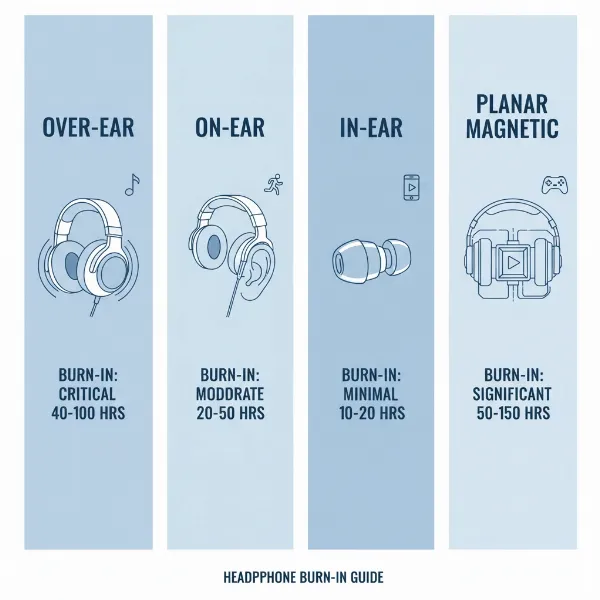 An infographic comparing different headphone types (over-ear, in-ear, planar magnetic) with icons representing their burn-in recommendations.
Is Headphone Burn-In Right for You? (A Personal Buying Guide)
Ultimately, the decision to burn in your new headphones comes down to personal preference and belief. There’s no universal right or wrong answer, but considering a few factors can help you make an informed choice.
Define Your Belief
Are you swayed by the numerous anecdotal accounts from audiophiles who swear by the transformative power of burn-in, or do you lean towards the scientific skepticism that highlights brain adaptation and the placebo effect? Many find themselves in a middle ground, open to the possibility without firm conviction. It’s a personal journey of discovery, and your own listening experience is the most important metric.
Assess Your Headphones
The type and quality of your headphones might influence your decision. More expensive, high-fidelity models, particularly those with dynamic drivers, are where enthusiasts often seek out the most subtle improvements through burn-in. For budget-friendly headphones, the potential for noticeable sonic differences after burn-in is generally lower. Some manufacturers even perform a pre-burn-in or extensive testing during production, making further burn-in less impactful.
Consider the Time Commitment
Performing a headphone burn-in requires a significant time commitment, often ranging from tens to hundreds of hours of unattended playback. Ask yourself if the potential (and debated) sonic benefits are worth the investment of time and effort. Would you rather simply start enjoying your music immediately, or are you willing to dedicate the time to this ritual?
Focus on What Matters: Comfort and Fit
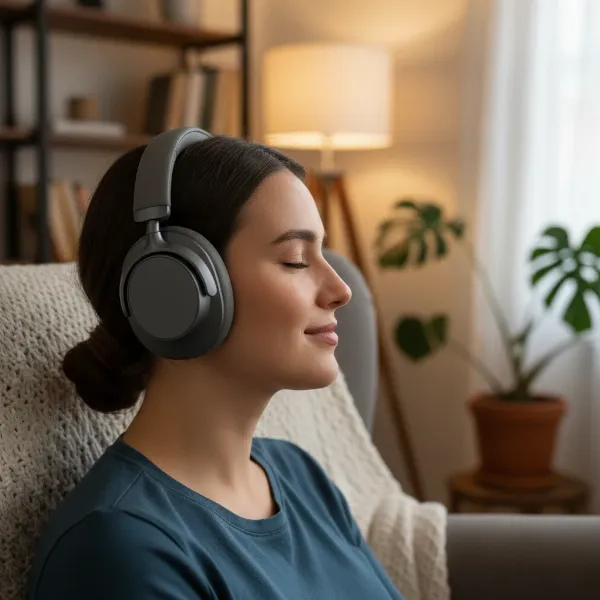
Regardless of the burn-in debate, one aspect that undeniably improves with use is the comfort and fit of your headphones. Ear pads will conform to your head, and the headband will settle into a more comfortable position. A perfect seal around your ears is paramount for optimal sound delivery, especially for bass response. Prioritize ensuring your headphones fit comfortably and securely, as this will have a far more consistent and noticeable impact on your listening experience than any potential driver burn-in.
 A person trying on different headphones, emphasizing comfort and fit as key decision factors.
Conclusion
The debate surrounding “headphone burn-in” is a fascinating microcosm of the audio world, highlighting the tension between objective measurement and subjective experience. While scientific evidence for significant physical changes in headphone drivers leading to audible improvement remains limited, the profound impact of “brain burn-in” and the physical settling of ear pads and headbands are undeniable. Many audiophiles genuinely perceive a positive transformation in their headphones after a burn-in period, a testament to the power of expectation and human auditory adaptation.
Ultimately, performing a burn-in is a low-risk, personal experiment. It won’t harm your headphones, and for many, the ritual itself adds to the enjoyment and appreciation of their new audio gear. Whether through actual mechanical changes or simply psychological acclimation, if you feel your headphones sound better after burn-in, then for you, the process has succeeded.
Have you experienced a noticeable difference with headphone burn-in, or do you believe it’s purely psychological?
Frequently Asked Questions
Will burning in my headphones damage them?
No, performing a headphone burn-in at moderate volumes is generally considered safe and will not damage your headphones. Exposing them to excessively loud volumes for extended periods, however, can stress components and potentially cause damage, irrespective of burn-in.
What kind of music is best for headphone burn-in?
For burn-in, it’s recommended to use music or sound files that cover a wide range of frequencies, from deep bass to crisp highs. Genres like classical, jazz, rock, or electronic music with rich, dynamic soundscapes are often suggested. Specialized burn-in tracks with pink noise, white noise, or frequency sweeps are also popular for comprehensively exercising the drivers.
How long does headphone burn-in take?
The recommended burn-in time varies greatly among proponents, from as little as 10 hours to over 200 hours. A common recommendation is often cited between 40 to 100 hours for dynamic driver headphones. Some suggest breaking this into several shorter sessions rather than continuous playback to prevent potential overheating in some rare cases.
Can I just use my headphones normally to burn them in?
Yes, simply using your headphones for regular listening is often considered a natural form of “burn-in.” Over time, your brain will adapt to the sound signature, and ear pads will conform to your head, potentially leading to a more comfortable fit and a perceived improvement in sound quality without any dedicated effort.
Do all headphones need to be burned in?
Not necessarily. The debate around physical driver burn-in applies mostly to headphones with dynamic drivers. Planar magnetic and electrostatic headphones are less frequently cited for needing burn-in due to their different driver technologies and inherent stability. Many believe the most significant “break-in” for any headphone type is psychological adaptation by the listener.