Navigating the world of high-fidelity audio can be exhilarating, especially when it comes to In-Ear Monitors (IEMs). These compact powerhouses offer an immersive listening experience, whether you’re a professional musician on stage, a dedicated audiophile, or simply someone who appreciates exceptional sound on the go. But as you delve deeper, a pivotal choice emerges: Custom In-Ear Monitors (CIEMs) or Universal In-Ear Monitors (UIEMs)? This decision significantly impacts comfort, sound quality, and overall user experience. Let’s explore the fundamental differences, advantages, and disadvantages of each to help you make an informed decision tailored to your unique auditory needs.
Understanding In-Ear Monitors (IEMs)
In-Ear Monitors are sophisticated audio devices designed to fit snugly within the ear canal, providing high-quality sound monitoring and excellent isolation from external noise. Unlike traditional earbuds or headphones, IEMs aim to deliver a precise and detailed sound directly to your eardrum, making every nuance of your audio clear. They are favored by musicians for live performance monitoring, by audio engineers for critical listening, and by audiophiles seeking an uncompromised portable sound experience. Their ability to seal the ear canal effectively is key to their superior performance, allowing for lower listening volumes and better hearing protection.
Custom In-Ear Monitors (CIEMs)
Custom In-Ear Monitors are bespoke audio devices, individually molded to the exact contours of your ear canals. This personalized approach begins with professional ear impressions taken by an audiologist, ensuring a fit that is as unique as your fingerprints. The resulting CIEMs offer an unparalleled listening experience, often considered the pinnacle of in-ear audio.
Advantages of Custom IEMs
|
Our Picks for the Best headphone in 2026
As an Amazon Associate I earn from qualifying purchases.
|
||
| Num | Product | Action |
|---|---|---|
| 1 | Hybrid Active Noise Cancelling Bluetooth 6.0 Headphones 120H Playtime 6 ENC Clear Call Mic, Over Ear Headphones Wireless with Hi-Res Audio Comfort Earcup Low Latency ANC Headphone for Travel Workout |

|
| 2 | Logitech H390 Wired Headphones with Mic, USB-A Headset with Microphone for PC, Noise Cancelling Microphone for Video Meetings, Music, Gaming - Black |
|
| 3 | Soundcore by Anker Q20i Hybrid Active Noise Cancelling Headphones, Wireless Over-Ear Bluetooth, 40H Long ANC Playtime, Hi-Res Audio, Big Bass, Customize via an App, Transparency Mode |
|
| 4 | Sony WH-CH520 Wireless Headphones Bluetooth On-Ear Headset with Microphone and up to 50 Hours Battery Life with Quick Charging, Black |
|
| 5 | JBL Tune 770NC - Adaptive Noise Cancelling with Smart Ambient Wireless Over-Ear Headphones, Bluetooth 5.3, Up to 70H Battery Life with Speed Charge, Lightweight, Comfortable & Foldable Design (Black) |
|
| 6 | BERIBES Bluetooth Headphones Over Ear, 65H Playtime and 6 EQ Music Modes Wireless Headphones with Microphone, HiFi Stereo Foldable Lightweight Headset, Deep Bass for Home Office Cellphone PC Ect. |
|
| 7 | Soundcore by Anker Q20i Hybrid Active Noise Cancelling Headphones, Wireless Over-Ear Bluetooth, 40H Long ANC Playtime, Hi-Res Audio, Big Bass, Customize via an App, Transparency Mode (White) |
|
| 8 | TAGRY Hybrid Active Noise Cancelling Bluetooth Headphones 100H Playtime Wireless Over Ear Headphone with Fast Charging Hi-Res Audio Headsets Comfort Earcups for Commute Travel Office Phone PC Black |
|
| 9 | Sony WH-CH720N Noise Canceling Wireless Headphones Bluetooth Over The Ear Headset with Microphone and Alexa Built-in, Black New |
|
| 10 | Sony WH-CH520 Wireless Headphones Bluetooth On-Ear Headset with Microphone and up to 50 Hours Battery Life with Quick Charging, Blue |
|
CIEMs boast several compelling benefits that set them apart, especially for demanding users.
Precision Fit and Comfort
The most significant advantage of CIEMs is their perfectly tailored fit. Because they are sculpted from impressions of your own ears, they sit securely and comfortably without exerting pressure, even during extended wear. This snug fit makes them ideal for musicians who move rigorously on stage or audiophiles who enjoy long listening sessions without discomfort. Many users report that a properly fitted CIEM feels almost invisible in the ear.
Unrivaled Noise Isolation
The precise, full-shell fit of CIEMs creates an exceptional acoustic seal, offering superior passive noise isolation. This means external sounds are significantly blocked out, often by as much as -26dB. This high level of isolation is crucial for live performers to hear their mix clearly over stage noise, and for audiophiles to enjoy their music without distractions in noisy environments like commutes or offices. It also allows for monitoring at safer, lower volumes, protecting your hearing.
Superior Sound Fidelity
With a perfect seal, CIEMs ensure that audio is delivered directly and consistently into your ear canal, optimizing sound reproduction. This tailored acoustic environment can lead to enhanced clarity, improved soundstage, and more accurate instrumental separation compared to universal-fit alternatives. Manufacturers can also optimize driver placement specifically for your ear’s acoustics, further enhancing the sonic response.
Personalization and Aesthetics
CIEMs offer extensive customization options, allowing you to choose shell colors, faceplate designs, and even integrate custom artwork. This transforms your IEMs into a unique reflection of your personal style or brand, a feature largely absent in universal models.
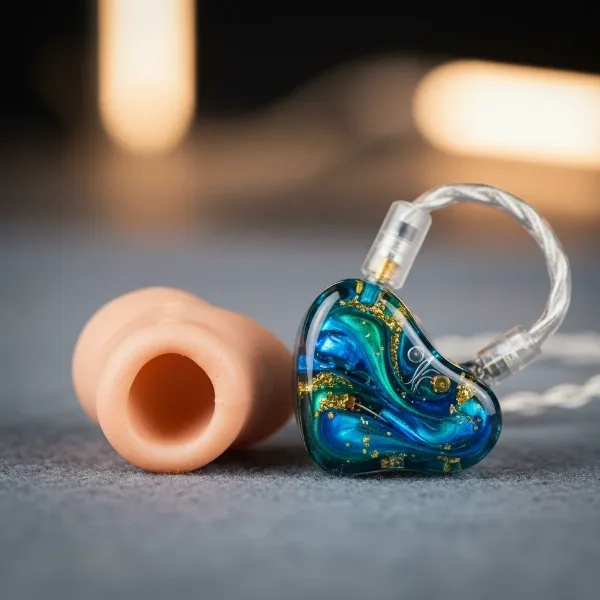 Close-up of a custom in-ear monitor (CIEM) next to an ear impression, highlighting the personalized fit process and intricate design.
Disadvantages of Custom IEMs
Despite their numerous benefits, CIEMs come with certain drawbacks that can influence a buyer’s decision.
Higher Investment
The personalized manufacturing process, involving skilled labor and specialized materials, means CIEMs are generally more expensive than their universal counterparts. The cost can range from a few hundred to several thousand dollars, depending on the number of drivers and chosen customizations. This significant upfront investment requires careful consideration.
Inconvenient Acquisition Process
Obtaining CIEMs is not an immediate process. It requires visiting an audiologist to get ear impressions taken, which can cost between $50 to $150. After the impressions are sent to the manufacturer, there’s typically a waiting period for manufacturing, which can range from a few weeks to over a month. This multi-step process can be less convenient than simply buying a universal model off the shelf.
Limited Sharing and Resale Value
Due to their unique, custom fit, CIEMs cannot be easily shared with others. This limits their versatility if you intended to lend them to fellow musicians or friends. Furthermore, their highly personalized nature significantly reduces their resale value, often fetching 50% or less of the original purchase price. If your ear shape changes due due to weight fluctuations or growth, your CIEMs might need to be remade, adding to the long-term cost.
Universal In-Ear Monitors (UIEMs)
Universal In-Ear Monitors are designed to fit a wide range of ear shapes using various interchangeable ear tips made from materials like silicone or foam. They are readily available and represent the majority of IEMs on the market, offering a more accessible entry point into high-quality in-ear audio.
Advantages of Universal IEMs
UIEMs offer practical benefits that appeal to a broader audience.
Affordability and Accessibility
Generally, universal IEMs are more affordable than custom models with comparable internal components, primarily because they bypass the complex custom molding and manufacturing process. They are also widely available from various retailers, making them a quick and easy purchase without the need for audiologist appointments or long wait times.
Immediate Availability and Flexibility
You can purchase and use universal IEMs almost immediately. This “plug-and-play” convenience is a major draw, especially for those who need an IEM quickly for a gig or travel. Their non-custom fit also allows them to be shared among multiple users, making them versatile for studio settings or for backup use.
Ease of Maintenance
Universal IEMs often feature removable ear tips, which can be easily cleaned or replaced. This modularity can simplify maintenance and allow users to experiment with different tip materials and sizes to find their preferred comfort and sound profile.
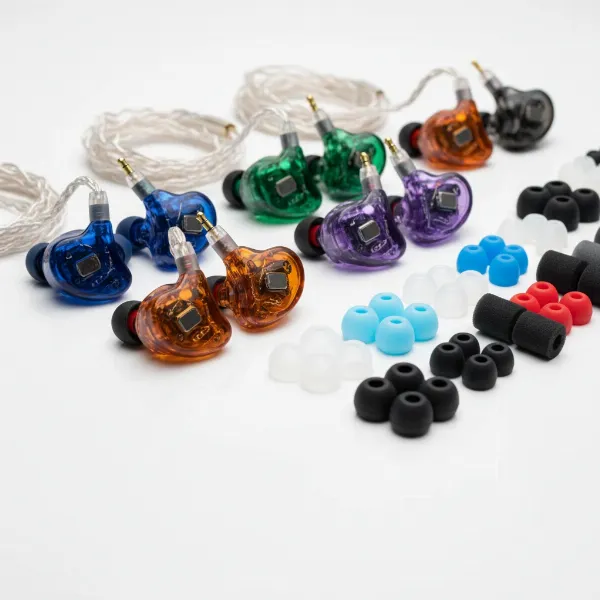 A selection of universal in-ear monitors (UIEMs) with various silicone and foam ear tips displayed, illustrating their interchangeable nature and broad compatibility.
Disadvantages of Universal IEMs
While convenient, universal IEMs do come with certain trade-offs.
Compromised Fit and Comfort
The “one-size-fits-most” design of universal IEMs means they may not achieve a perfect seal or comfortable fit for every ear. This generic fit can sometimes lead to discomfort, especially during prolonged use, as the ear tips rely on outward pressure to create a seal. An inconsistent fit can also cause the IEMs to slip out, particularly during physical activity.
Variable Noise Isolation
While UIEMs provide some level of passive noise isolation, it is generally less effective than that offered by CIEMs. The degree of isolation can vary significantly depending on the ear tip material, size, and how well it seals within the ear canal. Typically, universal IEMs might only reduce ambient noise by 8-9 decibels, which is less protective in very loud environments.
Potential for Sound Inconsistency
The sound quality of universal IEMs is highly dependent on achieving a good seal and consistent insertion depth. If the fit is not optimal, sound leakage can occur, leading to a compromised audio experience, particularly a reduction in bass response and overall clarity. This variability means the perceived sound can differ from person to person and even with each insertion.
Key Factors When Choosing Between CIEMs and UIEMs
Making the right choice between CIEMs and UIEMs depends heavily on your personal priorities and how you intend to use them.
Intended Use Case
For professional musicians, audio engineers, and live performers, CIEMs are often the superior choice due to their consistent fit, maximum noise isolation, and reliable sound reproduction on stage. For casual listeners, audiophiles who value flexibility, or those needing a backup pair, UIEMs offer a compelling balance of performance and practicality.
Budget Considerations
CIEMs represent a significant investment, often reflecting their custom craftsmanship and advanced acoustic designs. If your budget is a primary concern, universal IEMs provide excellent sound quality at a more accessible price point. However, consider the long-term value: a CIEM, if cared for, can be a durable, personalized tool for years.
Prioritizing Comfort and Fit
If you struggle to find a comfortable and secure fit with standard earbuds or experience ear fatigue during long listening sessions, the custom fit of CIEMs will likely be a game-changer. They are designed to “disappear” into your ears, offering unparalleled comfort. For many, however, well-fitting universal IEMs with the right ear tips can also provide adequate comfort.
Desired Sound Performance
Both CIEMs and high-end UIEMs can deliver exceptional sound. However, the consistent seal and acoustic optimization of CIEMs often provide a more stable and potentially more refined sonic presentation, with improved soundstage and detail. UIEMs can still offer fantastic audio, but their performance is more susceptible to variations in fit and ear tip choice.
Customization Options
If expressing your individuality through your audio gear is important, CIEMs offer a vast array of aesthetic customization options, from colors and materials to personalized artwork. Universal IEMs, while sometimes available in different colors, generally lack this level of bespoke personalization.
Bảng So Sánh Các Mẫu IEM Phổ Biến
| Feature | Custom In-Ear Monitors (CIEMs) | Universal In-Ear Monitors (UIEMs) |
|---|---|---|
| Fit | Exact anatomical fit, molded to individual ear canals | Generic fit, relies on interchangeable ear tips (silicone, foam) |
| Comfort | Unparalleled, virtually “disappears” for long periods | Variable, depends on ear shape and tip choice, can cause pressure |
| Noise Isolation | Superior passive isolation (e.g., -26 dB) | Good to moderate, variable (e.g., 8-9 dB) |
| Sound Quality | Consistent and optimized, enhanced clarity & soundstage | Can be excellent, but dependent on consistent seal and tip choice |
| Cost | Higher, due to personalized manufacturing and materials | Generally lower, more accessible price points |
| Acquisition Process | Requires audiologist visit for impressions, longer wait times | Readily available off the shelf, immediate use |
| Sharing | Not shareable due to unique fit | Easily shareable among multiple users |
| Resale Value | Significantly lower due to custom fit | Generally retains better resale value |
| Customization | Extensive aesthetic options (colors, artwork) | Limited to shell colors, some interchangeable components |
| Maintenance | Can be harder to clean without removable tips | Easier to clean and replace ear tips |
A Buying Guide for Your Next IEMs
Choosing the right IEMs, whether custom or universal, is a personal journey. By following these steps, you can confidently navigate the options and find the perfect pair for your auditory needs.
Define Your Needs
Start by asking yourself what you’ll primarily use your IEMs for. Are you a performing musician needing maximum isolation and reliability on stage? An audiophile seeking the ultimate listening experience at home and on the go? Or a casual listener who wants an upgrade from standard earbuds for daily commutes? Your use case will heavily influence the features you prioritize, such as noise isolation, durability, or portability. Also, consider your preferred music genres and sound signatures.
Set Your Budget
IEMs span a wide price range, from under $100 for entry-level universal models to several thousand dollars for multi-driver custom units. Establish a realistic budget that accounts for not only the IEMs themselves but also potential additional costs like ear impressions for CIEMs (typically $50-$150) or upgraded cables and tips for UIEMs. Remember that price often correlates with sound quality, driver count, and build materials, but diminishing returns can apply at the very high end.
Explore Reputable Brands
Researching established and well-regarded IEM manufacturers is crucial. Brands like Ultimate Ears, 64 Audio, Shure, Sennheiser, and others have a strong reputation for quality, innovation, and customer support. Look into their product lines, technologies (like balanced armature vs. dynamic drivers), and what they are known for, such as specific sound signatures or unique fitting options.
Read Reviews and Demos
Before committing to a purchase, read comprehensive reviews from trusted audio publications and user forums. Pay attention to feedback regarding sound quality, comfort, durability, and customer service. If possible, try to demo universal IEMs to experience their fit and sound firsthand. For CIEMs, while direct demoing is harder, some manufacturers offer “demo boxes” with universal versions that approximate their custom sound signatures.
Try Before You Buy (If Possible)
For universal IEMs, physically trying them on is invaluable. Visit audio stores or attend audio shows to test different models and ear tip styles. Assess the comfort and seal. For CIEMs, while you can’t “try” the custom fit, ensuring your audiologist takes high-quality ear impressions is paramount, as the final fit depends entirely on their accuracy.
Purchase from Authorized Dealers
Always buy your IEMs from authorized dealers or directly from the manufacturer. This ensures you receive genuine products, proper warranties, and access to customer support, including refit guarantees for CIEMs, which are often standard. Avoid unofficial channels to mitigate risks associated with counterfeit products or lack of warranty.
Conclusion
Choosing between Custom IEMs and Universal IEMs is a decision that significantly impacts your personal audio experience. CIEMs offer an unmatched personalized fit, superior noise isolation, and consistent sound fidelity, making them a preferred choice for professionals and serious audiophiles willing to invest in a bespoke solution. However, they come with a higher cost and a more involved purchasing process. Universal IEMs, conversely, provide greater affordability, immediate availability, and flexibility, making them an excellent entry point for many listeners. While their fit and isolation can be more variable, advancements in ear tip technology have significantly improved their performance. Ultimately, your ideal choice hinges on a balance of your specific needs, budget, and priorities concerning comfort, sound performance, and convenience. Consider your primary use, explore the reputable options available, and take the time to make an informed decision that will enrich your listening journey for years to come.
What factors weigh most heavily in your personal decision when selecting your ideal in-ear monitors?
Frequently Asked Questions
What are ear impressions for CIEMs?
Ear impressions are precise molds of your ear canals and outer ear taken by a licensed audiologist using a silicone-based material. These impressions are then sent to the IEM manufacturer, who uses them to custom-build the shells of your CIEMs, ensuring a perfect, airtight fit unique to your anatomy. The quality and accuracy of these impressions are crucial for the final comfort and sound performance of your custom in-ear monitors.
Can I use custom ear tips with Universal IEMs?
Yes, some companies offer custom ear tips designed to be used with universal IEMs. These tips are molded to your ear canal, similar to CIEMs, but are designed to fit onto the nozzle of a universal IEM. This can significantly improve the fit, comfort, and noise isolation of a universal model, offering a middle-ground solution between standard UIEMs and full CIEMs.
Do more drivers always mean better sound in IEMs?
While more drivers often lead to greater clarity and the potential for a more refined sound by allowing specific frequency ranges to be handled by dedicated drivers, it’s not a universal rule. The tuning, quality of individual drivers, crossover design, and overall acoustic engineering are equally, if not more, important. A well-designed IEM with fewer drivers can outperform a poorly implemented one with many drivers.
How long do Custom IEMs last?
With proper care and maintenance, Custom IEMs can last for many years. Their lifespan depends on the quality of manufacturing, how well they are maintained (regular cleaning is essential to prevent earwax buildup), and whether your ear shape undergoes significant changes over time. Manufacturers often offer repair services for damaged CIEMs, extending their usability.