Tired of headphones that give up on you just when you need them most? In a world saturated with delicate tech, finding audio gear that can withstand the rigors of daily life, intense workouts, or demanding job sites feels like a quest. While true wireless earbuds offer convenience, their small, easily lost, and sometimes fragile nature can be a significant drawback for users prioritizing longevity and ruggedness. This is where neckband headphones shine, offering a blend of wireless freedom and enhanced durability.
This comprehensive guide will delve into what makes neckband headphones a durable choice, highlight essential features to look for, and recommend the top models specifically designed to endure. Whether you’re an avid gym-goer, an outdoor adventurer, or simply seeking a reliable audio companion that lasts, we’ll help you navigate the options to find your perfect match.
Why Choose Neckband Headphones for Durability?
Neckband headphones present a compelling alternative for those prioritizing resilience. Unlike their true wireless counterparts, which are prone to being misplaced or damaged if their charging case is compromised, neckband headphones offer a secure, around-the-neck fit. This design significantly reduces the risk of losing an earbud and often means the main unit houses a larger battery and more robust internal components, contributing to a longer lifespan. The connecting cable, while a potential point of failure if not well-designed, generally provides a safeguard against accidental drops compared to individual earbuds. The inherent design also allows for more flexible materials in the neckband itself, which can absorb impacts better than rigid cases.
Essential Durability Features to Look For
When selecting neckband headphones for durability, several key features stand out. Understanding these specifications will empower you to make an informed choice that matches your lifestyle.
IP Ratings (Water and Dust Resistance)
An Ingress Protection (IP) rating is crucial for determining how well headphones can withstand environmental elements like sweat, rain, and dust. The two numbers following “IP” indicate protection levels: the first for solids (dust) and the second for liquids (water).
- IPX4: Offers protection against splashing water from any direction. This is the minimum recommended for sweat and light rain during workouts or commutes. For example, the Beyerdynamic Blue BYRD (2nd gen) and Sony WI-C100 both feature an IPX4 rating, making them suitable for everyday splashes and sweat.
- IP54/IP55: “5” for dust protection means limited ingress of dust is permitted but it won’t interfere with operation; “4” or “5” for water means protection against splashes or low-pressure jets of water. The Jabra Evolve 65e boasts an IP54 rating, ideal for gym use. The JLab JBuds Pro Wireless Signature offers IP55 protection against dust and moisture.
- IPX5/8, IPX7: Higher ratings indicate greater water resistance, with “X7” meaning temporary immersion up to 1 meter for 30 minutes, and “X8” for prolonged immersion under specific conditions. For instance, the Sony NW-WS623 is “incredibly durable, with IPX5/8 waterproofing and IP6X dust-proofing,” making it suitable for swimming and harsh environments. The Rythflo WH02 also features an impressive IPX7-grade waterproofing. If you plan on submersing your headphones, an IPX7 or higher rating is essential.
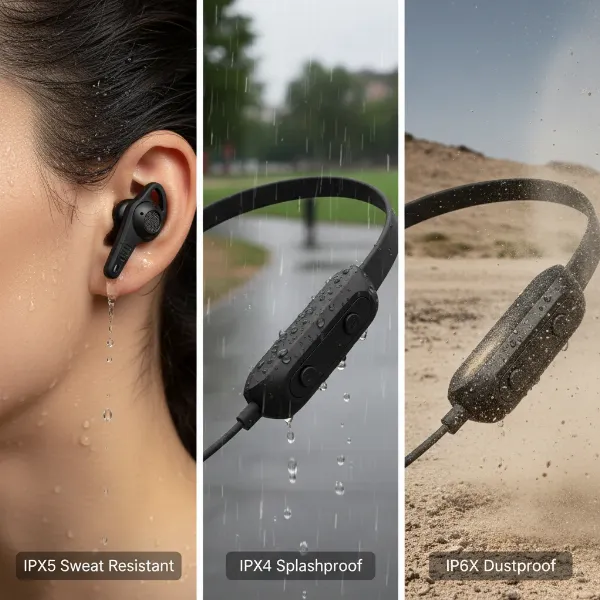 Neckband headphones being used in various conditions, demonstrating water and dust resistance features through IP ratings.
Build Materials and Construction
The physical composition of neckband headphones plays a significant role in their ability to withstand wear and tear. Look for:
- Flexible Neckband: Materials like silicone or high-grade flexible plastics allow the neckband to bend and twist without snapping, reducing the risk of damage from accidental tugs or awkward storage. The Sony WI-1000XM2, for example, features a flexible silicone neckband.
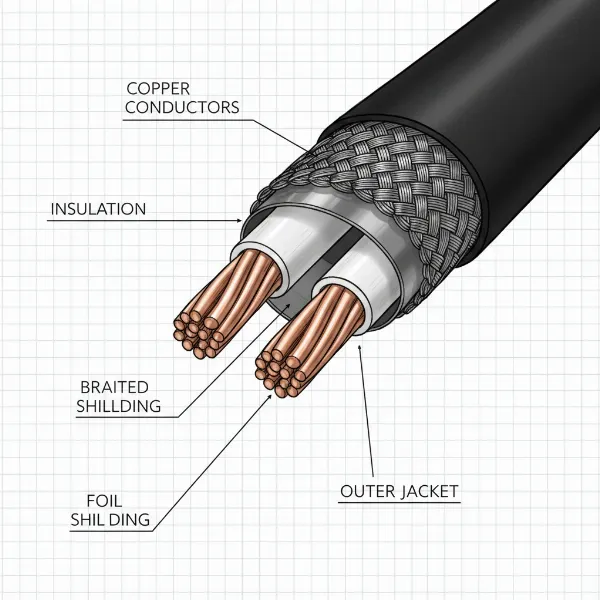
- Reinforced Cables: The wires connecting the earbuds to the neckband can be a common failure point. Thicker, more robust cables or those with a braided design are less likely to fray, pinch, or break over time.
- Quality Housings: Earbud and neckband housings made from durable plastics or even lightweight metals can offer better impact resistance.
Design Elements for Longevity
Certain design choices enhance the overall durability of neckband headphones:
- Ret retractable Earbuds: Models like the LG Tone Style SL5 incorporate retractable earbuds, which protect the cables from snagging and tangling when not in use, reducing strain and prolonging their life.
- Magnetic Earbuds: Many neckband headphones feature magnetic earbuds that clip together when removed from your ears. This helps prevent them from dangling freely and getting caught, minimizing wear and tear on the cables.
- Included Carrying Cases: A hard carrying case, often provided with premium models like the Sony WI-1000XM2, offers an extra layer of protection during transport, shielding the headphones from impacts and pressure.
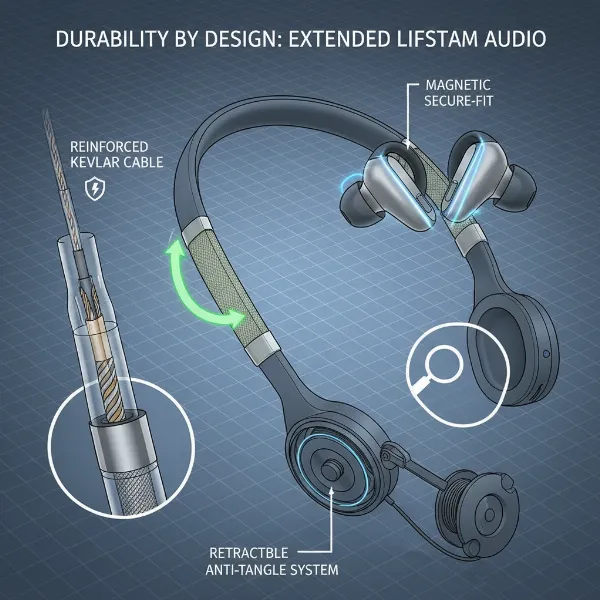 Neckband headphones demonstrating design features like flexible neckbands, reinforced cables, and magnetic earbuds for enhanced longevity.
Battery Life
While not a direct durability feature, extended battery life contributes to longevity by reducing the frequency of charging cycles. Each charge cycle adds wear to the battery, so headphones with longer life can potentially maintain optimal performance for a greater period.
Top Neckband Headphones Built to Last
Based on expert reviews and user feedback, several neckband headphones consistently stand out for their robust construction and ability to endure demanding conditions.
Sony WI-1000XM2
Praised for their well-built design and flexible silicone neckband, the Sony WI-1000XM2 are a premium choice. They come with a hard case for added protection and feature excellent active noise cancellation, making them suitable for commuters and frequent travelers who need reliable performance and durability.
Sony NW-WS623
If extreme durability and water resistance are your top priorities, the Sony NW-WS623 is an exceptional contender. It boasts impressive IPX5/8 waterproofing and IP6X dust-proofing, allowing for submersion and protection against fine particles. These headphones are designed to withstand harsh environments and a wide range of temperatures, making them ideal for swimmers, extreme sports enthusiasts, or those who work in rugged conditions.
Jabra Evolve 65e
For professionals or gym-goers, the Jabra Evolve 65e offers a robust solution with an IP54 rating. This provides good protection against dust and splashes, ensuring reliable performance during calls, music listening, and workouts.
JLab JBuds Pro Wireless Signature
A more budget-friendly option, the JLab JBuds Pro Wireless Signature features an IP55 rating, offering solid protection against dust and moisture. This makes them a durable choice for active users or as a reliable backup pair for rougher use.
Beats Flex
Despite some anecdotal reports of cracking, many users attest to the surprising toughness of the Beats Flex. They are frequently highlighted for holding up well under harsh conditions, including farm work and construction, making them a popular choice for those needing a rugged yet affordable option. Their W1 chip ensures seamless connectivity within the Apple ecosystem, and they offer a respectable 12 hours of battery life.
Soundcore Life U2i
The Soundcore Life U2i (or U2) consistently earns praise for its overall reliability and value. While some users have reported specific issues, the brand often provides good customer support for replacements, underlining a commitment to user satisfaction and product longevity. They typically offer an IPX5 rating, making them sweat and splash-resistant for active use.
Sony WI-C100 / WI-C200B / WI-C310
These affordable Sony models often surprise users with their durability. Users have reported the WI-C200B and WI-C310 being “super sturdy,” “washed and dropped many times,” and lasting over three years for construction workers, showcasing their unexpected resilience for everyday heavy use. The WI-C100 also carries an IPX4 rating, adding to its robust nature.
How to Choose the Most Durable Neckband Headphones for Your Needs
Selecting the right durable neckband headphones involves more than just picking a popular model. It requires a thoughtful assessment of your specific use case and priorities.
1. Identify Your Primary Use Case
Consider where and how you’ll primarily use your headphones.
- Workouts/Sports: Look for high IP ratings (IPX4 and above), especially IPX7 for swimming, along with a secure fit and sweat resistance.
- Outdoor Work/Construction: Prioritize robust build materials, high dust and water resistance (e.g., IP54/IP55, IP6X), and potentially noise isolation.
- Daily Commute/Office: Focus on comfortable, flexible neckbands, decent battery life, and enough splash resistance for unexpected rain.
- Travel: ANC (Active Noise Cancellation) might be a key feature in addition to durability, as seen in the Sony WI-1000XM2.
2. Assess Required IP Rating
Match the IP rating directly to your anticipated exposure. Don’t overspend on IPX8 if you only need sweat resistance, but don’t under-spec if you plan on getting wet.
“Understanding IP ratings is critical. An IPX4 is great for sweat, but if you’re swimming or working in very dusty environments, you’ll need something like an IP67 or IP68 for true peace of mind.” – Alex Chen, Audio Gear Analyst at TechSound Reviews
3. Consider Build and Design
Examine the neckband’s flexibility and the cables’ perceived strength. Flexible silicone neckbands generally offer better resistance to impacts and bending. Magnetic earbuds and retractable designs can also reduce wear and tear.
4. Read User Reviews
Real-world experiences, particularly from users with similar use cases to yours, provide invaluable insights into a product’s actual durability. Pay attention to common complaints about failure points (e.g., cable fraying, button issues).
5. Check Warranty and Brand Reputation
A strong warranty and a brand known for good customer support can offer assurance. Brands that stand behind their products often indicate confidence in their quality and durability.
Maximizing the Lifespan of Your Neckband Headphones
Even the most durable headphones benefit from proper care. Following these tips can significantly extend their lifespan:
- Proper Storage: Use any included carrying case or find a secure spot where the headphones won’t be crushed, tangled, or exposed to excessive heat or cold.
- Regular Cleaning: Sweat, dirt, and earwax can accumulate and degrade materials over time. Gently clean your earbuds and neckband regularly with a soft, damp cloth.
- Careful Handling: Avoid aggressively tugging on the cables or yanking the earbuds out of your ears. Always remove them gently.
- Avoid Extreme Temperatures: Prolonged exposure to very high or very low temperatures can damage batteries and electronic components.
Conclusion
Investing in a pair of durable neckband headphones is a smart choice for anyone seeking reliability and longevity in their audio gear. By understanding the importance of IP ratings, robust construction, and smart design features, you can confidently select a model that will stand the test of time, accompanying you through every workout, commute, and adventure. Models like the Sony WI-1000XM2, Sony NW-WS623, and even the user-favorite Beats Flex demonstrate that durability doesn’t mean compromising on sound quality or features.
Why settle for headphones that constantly let you down when you can have a steadfast audio companion built for the long haul? What feature do you value most in a durable set of headphones?
Frequently Asked Questions
Are neckband headphones more durable than true wireless earbuds?
Generally, yes. Neckband headphones are often considered more durable because they have a physical connection between the earbuds, making them harder to lose and less prone to damage from individual drops. Their larger neckband can also house more robust components and offer better protection against impacts than the small, individual true wireless earbuds and their charging cases.
What is a good IP rating for sweat resistance?
For sweat resistance, an IPX4 rating is generally considered a good minimum. This indicates protection against splashing water from any direction, which adequately covers sweat and light rain. For more intense workouts or heavy rain, an IPX5 or higher rating would offer greater peace of mind.
How long do neckband headphones usually last?
The lifespan of neckband headphones can vary widely depending on build quality, care, and usage, but many durable models are reported to last 2-5 years or even longer with proper maintenance. Brands known for quality and those with higher IP ratings tend to offer greater longevity.
Can I swim with neckband headphones?
Yes, but only if they have a sufficiently high IP rating specifically for water immersion, such as IPX7 or IPX8. An IPX7 rating means they can withstand temporary immersion up to 1 meter for 30 minutes, while IPX8 allows for prolonged immersion. Crucially, for underwater use, the headphones also need onboard storage for music, as Bluetooth signals do not reliably transmit through water.