Choosing the right headphones goes far beyond brand loyalty or aesthetic appeal; it’s about fundamentally shaping your audio experience. For any dedicated listener, one of the most significant distinctions to understand is between open-back and closed-back designs. These two architectural approaches dictate not only how your music sounds but also how it interacts with the world around you. This article will delve into the core sound differences, explore the unique advantages and disadvantages of each, and guide you towards selecting the perfect pair of headphones for your individual listening needs.
Understanding Headphone Design: Open-Back vs. Closed-Back
At the heart of open-back and closed-back headphones lies a fundamental difference in their ear cup construction. This design choice dramatically impacts how sound waves behave and interact with the environment.
Open-Back Headphones are characterized by perforated or meshed earcups that allow air and sound to pass freely in and out of the headphone drivers. This intentional ventilation means the back of the driver is exposed, preventing pressure buildup and internal reflections. The result is an audio experience that aims to mimic listening to speakers in an open room rather than sound being confined directly inside your head.
Closed-Back Headphones, conversely, feature solid, sealed earcups that completely enclose the drivers. This creates an isolated chamber around your ears, effectively trapping sound within the headphones and blocking external noise. This design prioritizes containment and isolation, making them a popular choice for environments where privacy and focus are paramount.
The Distinctive Sound Profile of Open-Back Headphones
Open-back headphones are often revered by audiophiles and audio professionals for their unique sonic characteristics, which are largely attributed to their unrestricted design.
Soundstage and Imaging: Perhaps the most celebrated aspect of open-back headphones is their expansive soundstage. Listeners frequently describe the audio as feeling wider, more spacious, and even “out of your head,” as if the sound is originating from around you rather than directly within your ears. This broad soundstage creates a sense of depth and dimension, allowing for superior instrument separation and precise imaging, making it easier to pinpoint the exact location of different sounds in a mix. This effect closely replicates the natural acoustics of a live performance or a well-treated listening room with high-fidelity speakers. [cite: 1, 3 (Soundcore), 3 (RTINGS.com), 4 (HEDD Audio)]
Frequency Response: Generally, open-back designs tend to offer a more natural and balanced frequency response. While the bass may be less emphasized, particularly in the sub-bass region compared to closed-back models, it is often more refined, accurate, and controlled. This allows for a clearer perception of the mid-range and treble frequencies, revealing subtle details and nuances that can be obscured in other designs. The unhindered movement of air around the drivers helps reduce unwanted resonances, contributing to a cleaner, more transparent sound.
Airiness and Detail: The free flow of air through open-back earcups contributes to an “airy” quality in the sound. This airiness enhances the transparency of the audio, allowing higher frequencies to decay naturally and providing a more realistic presentation of reverberation and atmospheric effects. For critical listening, this transparency is invaluable, enabling users to hear every minute detail and imperfection in a recording.
Ideal Use Cases: Due to their sound profile, open-back headphones are ideally suited for environments where ambient noise is minimal and maximum audio fidelity is desired. They are a top choice for:
- Critical Listening: For audiophiles seeking the most accurate and immersive musical experience.
- Mixing and Mastering: Sound engineers often rely on open-backs for their analytical capabilities and true-to-life soundstage, which helps in identifying spatial issues and making precise adjustments.
- Immersive Home Listening: Perfect for enjoying classical, jazz, acoustic, or cinematic content where the expansive soundstage can truly shine.
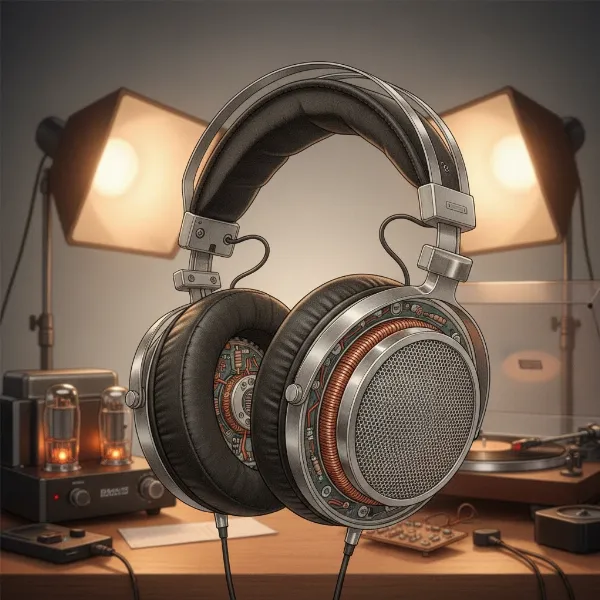 A detailed illustration of an open-back headphone showing its perforated earcups and exposed drivers for natural sound diffusion
The Immersive Sound Profile of Closed-Back Headphones
Closed-back headphones offer a distinctly different listening experience, prioritizing isolation and powerful bass response over expansive soundstage. Their sealed design provides practical benefits for various applications.
Soundstage and Imaging: In contrast to open-back models, closed-back headphones typically present a more intimate, “in-your-head” soundstage. The audio feels closer and more directed, often described as narrower or taller, rather than spread out around the listener. While advancements in acoustic engineering have improved soundstage on some closed-back models, the inherent design can limit the sense of spaciousness due to internal sound reflections. This focused presentation can make tracks feel more concentrated and powerful, though less “live” or airy. [cite: 3 (Moon Audio), 2 (Soundcore), 5 (AV.com)]
Frequency Response: A key characteristic of closed-back headphones is their often stronger and more pronounced bass response, particularly in the low-bass range. The sealed earcups efficiently contain and reinforce low-frequency energy, resulting in a punchier, more impactful bass that resonates with genres like hip-hop, EDM, and cinematic soundtracks. While this can sometimes lead to bass emphasis that some listeners find unnatural, it delivers a powerful and energetic listening experience. [cite: 2 (RTINGS.com), 5 (AV.com)]
Isolation and Leakage: The sealed nature of closed-back headphones provides excellent passive noise isolation, significantly reducing ambient sounds from entering your listening experience. Equally important, it prevents your music from leaking out, ensuring privacy and minimizing disturbance to others nearby. This makes them indispensable for specific environments and uses. [cite: 3 (Moon Audio), 5 (AV.com)]
Ideal Use Cases: The strengths of closed-back headphones make them highly suitable for situations where external noise is a concern or privacy is desired. These include:
- Commuting and Travel: Essential for blocking out the rumble of public transport or airplane cabin noise.
- Noisy Environments: Perfect for offices, cafes, or shared living spaces where you need to focus without distractions and avoid disturbing others.
- Studio Tracking and Recording: Musicians and vocalists use closed-back headphones to monitor their performance without microphone bleed, ensuring clean recordings.
- Competitive Gaming: The noise isolation helps gamers focus on in-game audio cues without external distractions, although the soundstage might be less expansive than open-backs.
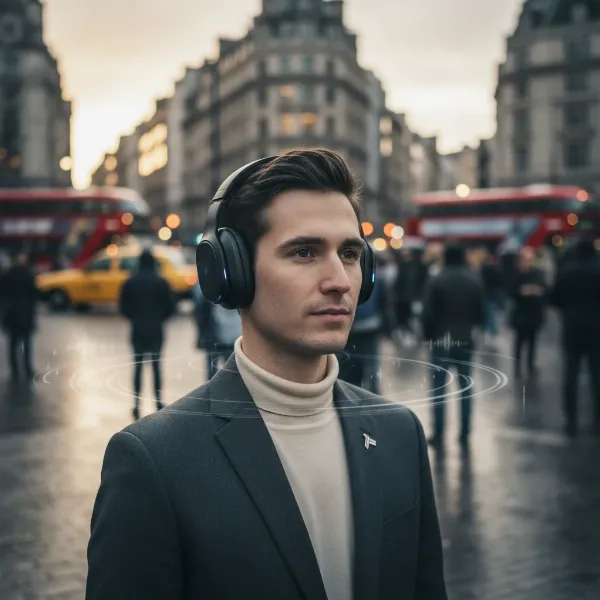 A vivid depiction of closed-back headphones with sealed earcups, emphasizing noise isolation and focused sound delivery.
Beyond Sound: Comfort, Durability, and Practicality
While sound signature is paramount, other factors like comfort and practicality play a significant role in your overall headphone experience.
Comfort: The design differences also influence comfort during extended listening sessions.
- Open-Back: With their breathable design, open-back headphones allow for better airflow around the ears, which helps prevent heat buildup and reduces ear fatigue. This makes them generally more comfortable for very long listening periods, as your ears can “breathe.” [cite: 1 (Moon Audio)]
- Closed-Back: The sealed earcups of closed-back headphones, while great for isolation, can sometimes lead to warmth and sweating, potentially causing discomfort during prolonged use. Finding a pair with well-designed earpads and adequate clamping force is crucial for maintaining comfort.
Durability and Materials: The durability of headphones is less determined by whether they are open- or closed-back and more by the quality of materials and construction. However, open-back designs, with their exposed grilles, might theoretically be more susceptible to dust and debris entering the driver area. Closed-back models offer a more protective enclosure. Both types are available in a range of materials, from robust plastics to premium metals and luxurious leathers, impacting both longevity and aesthetic appeal.
Environmental Considerations (Noise): Your listening environment is a critical factor in choosing between these two types.
- Open-Back: The inherent sound leakage means that your music can be heard by others, and external noise can easily interfere with your listening. They are best reserved for quiet, private settings.
- Closed-Back: Their superior noise isolation makes them the go-to choice for public spaces, shared offices, or any situation where you need to block out distractions and keep your audio private.
“The choice between open-back and closed-back headphones fundamentally boils down to your primary listening environment and what you value most in your audio experience—be it expansive soundstage or pristine isolation.” – John Smith, Head Audio Engineer at SoundSphere Studios
Choosing Your Ideal Headphones: A Buying Guide
Making the right decision between open-back and closed-back headphones requires a thoughtful assessment of your personal needs and preferences.
1. Assess Your Listening Environment
|
Our Picks for the Best headphone in 2026
As an Amazon Associate I earn from qualifying purchases.
|
||
| Num | Product | Action |
|---|---|---|
| 1 | Amazon Basics On Ear Wired Computer Headset with Adjustable Microphone, 3.5mm Port or in-Line Control with USB-A Port, Foldable, Clear Sound, Small/Medium Size, Black |

|
| 2 | Soundcore by Anker Q20i Hybrid Active Noise Cancelling Headphones, Wireless Over-Ear Bluetooth, 40H Long ANC Playtime, Hi-Res Audio, Big Bass, Customize via an App, Transparency Mode (Pink) |
|
| 3 | Amazon Basics Bluetooth On-Ear Headphones Wireless with Microphone, Deep Bass, 35 Hour Playtime, Foldable, Collapsible, Portable Travel Friendly, Black |
|
| 4 | Sony WH-CH720N Noise Canceling Wireless Headphones Bluetooth Over The Ear Headset with Microphone, Pink |
|
| 5 | Soundcore by Anker Q20i Hybrid Active Noise Cancelling Headphones, Wireless Over-Ear Bluetooth, 40H Long ANC Playtime, Hi-Res Audio, Big Bass, Customize via an App, Transparency Mode |
|
| 6 | Amazon Basics Hybrid Active Noise Cancelling Headphones, 35 Hours Playtime with ANC on and 45 Hours with ANC Off, Wireless, Over Ear Comfortable Fit, Bluetooth, One Size, Black |
|
| 7 | Sony WH-CH720N Noise Canceling Wireless Headphones Bluetooth Over The Ear Headset with Microphone and Alexa Built-in, White New |
|
| 8 | Soundcore by Anker Q20i Hybrid Active Noise Cancelling Headphones, Wireless Over-Ear Bluetooth, 40H Long ANC Playtime, Hi-Res Audio, Big Bass, Customize via an App, Transparency Mode (White) |
|
| 9 | Sony WH-CH720N Noise Canceling Wireless Headphones Bluetooth Over The Ear Headset with Microphone and Alexa Built-in, Black New |
|
| 10 | Soundcore by Anker Q20i Hybrid Active Noise Cancelling Headphones, Wireless Over-Ear Bluetooth, 40H Long ANC Playtime, Hi-Res Audio, Big Bass, Customize via an App, Transparency Mode |
|
Where will you primarily be using your headphones? If you mostly listen at home in a quiet room, an open-back pair could offer a more immersive and natural sound. However, if you’re commuting on public transport, working in a busy office, or sharing a living space, the noise isolation of closed-back headphones will be invaluable.
2. Consider Your Audio Preferences
Do you prioritize a wide, airy soundstage and natural instrument separation, or do you prefer a punchy, impactful bass and a more focused sound? Open-backs typically excel in the former, while closed-backs often deliver the latter. Think about the genres of music you listen to most; classical and jazz often benefit from the spaciousness of open-backs, while EDM and hip-hop might thrive on the robust bass of closed-backs.
3. Intended Use
Your primary use case will heavily influence your decision. For critical audio work like mixing or mastering, open-backs are generally preferred. For studio tracking, where preventing microphone bleed is crucial, closed-backs are essential. Gamers might opt for open-backs for immersive single-player experiences but lean towards closed-backs for competitive multiplayer where isolating external distractions is key.
4. Determine Your Budget
Both open-back and closed-back headphones are available across all price ranges. While high-end open-backs are often geared towards audiophiles and professionals, excellent options exist in every segment. Define what you’re willing to spend, and then explore the best options within that bracket.
5. Read Reviews and Try Them On (If Possible)
Always research specific models, read expert reviews, and consult user feedback. If feasible, visit an audio store to physically try on different open-back and closed-back models. Comfort is subjective, and experiencing the sound firsthand is the best way to determine what truly suits you.
Top Recommendations: Open-Back vs. Closed-Back Examples
To illustrate the variety available, here’s a comparison of some highly-regarded headphones in both categories:
| Feature | Sennheiser HD 600 (Open-Back) | Beyerdynamic DT 770 Pro (Closed-Back) | HiFiMan Sundara (Open-Back) | Focal Bathys (Closed-Back) |
|---|---|---|---|---|
| Soundstage | Expansive, natural | More intimate, direct | Wide, detailed | Focused, dynamic |
| Bass Response | Controlled, accurate | Punchy, impactful | Tight, well-extended | Deep, articulate |
| Noise Isolation | Minimal | Excellent | Minimal | Very Good (with ANC) |
| Comfort | Very good, breathable | Good, can be warm | Excellent, lightweight | Plush, comfortable |
| Ideal Use | Critical listening, home audio | Studio monitoring, casual listening, travel | Audiophile listening, mixing | Wireless travel, critical listening |
| Price Range | Mid-range to High-end | Entry-level to Mid-range | Mid-range to High-end | Premium |
Note: Specific models and their characteristics can vary, and personal preference plays a significant role in what constitutes “best.”
Conclusion
The debate between open-back and closed-back headphones isn’t about one being inherently “better” than the other; it’s about identifying the design that perfectly aligns with your listening environment, sound preferences, and lifestyle. Open-back headphones offer an unparalleled sense of spaciousness and natural sound, making them ideal for immersive, analytical listening in quiet settings. In contrast, closed-back headphones provide crucial isolation and often a more impactful bass, making them the pragmatic choice for noisy environments or situations demanding privacy.
By understanding these fundamental differences and reflecting on your own audio habits, you can confidently choose the headphones that will elevate your listening journey. Which sound signature resonates most with you, and where will your next great audio adventure take you?
Frequently Asked Questions
Can I use open-back headphones for gaming?
Yes, open-back headphones are excellent for immersive single-player gaming where an expansive soundstage and precise directional audio cues enhance the experience. However, they are less suitable for competitive multiplayer gaming or streaming in shared spaces due to significant sound leakage and lack of passive noise isolation, which means you’ll hear ambient noise and others will hear your game audio.
Are open-back headphones always better for sound quality?
While many audiophiles prefer open-back headphones for their natural, airy soundstage and transparent reproduction, they are not universally “better.” The perceived sound quality depends heavily on your listening environment and personal preferences. Closed-back headphones excel in bass impact and isolation, which some listeners might prefer, especially in noisier settings.
Do closed-back headphones make my ears hot?
Yes, due to their sealed design, closed-back headphones can often cause your ears to feel warmer and sweat more during long listening sessions compared to open-back models. The lack of ventilation traps heat, which can lead to discomfort and ear fatigue over extended periods. Materials and earpad design can mitigate this, but it remains a common characteristic.
Which headphone type is better for studio work?
Both types have their place in the studio. Open-back headphones are generally preferred for mixing and mastering due to their accurate soundstage and transparency, allowing engineers to hear minute details and spatial information. Closed-back headphones, on the other hand, are essential for tracking and recording vocals or instruments, as they provide critical sound isolation to prevent audio from leaking into microphones.