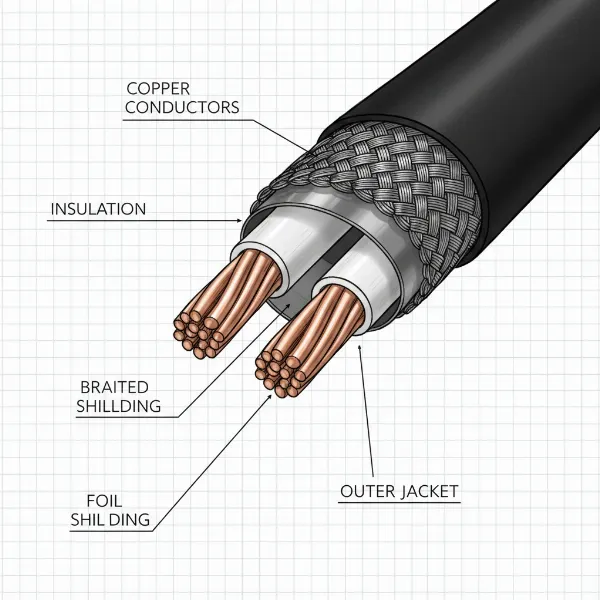
Stepping into the world of high-fidelity audio can be both exciting and a little overwhelming. You’ve invested in a great pair of headphones, eager to uncover every nuance of your favorite tracks, but then you encounter terms like “DAC” and “Amplifier,” and suddenly, your audio journey feels more complex. Many wonder if these additional devices are truly necessary or just expensive audiophile accessories. The truth is, while your everyday devices have built-in components that handle these functions, dedicated external units can unlock a dramatically superior listening experience, especially with higher-end headphones. This article will demystify DACs and amplifiers, explain their distinct roles, and help you determine exactly what you need to achieve your ultimate sound.
What is a DAC (Digital-to-Analog Converter)?
At its core, a Digital-to-Analog Converter (DAC) is the unsung hero of your digital audio experience. Essentially, all the music you listen to on your computer, smartphone, or streaming service exists as digital data—a series of ones and zeros. However, our ears and headphones can only interpret analog sound waves. The DAC’s crucial job is to translate that digital information into a continuous analog electrical signal, which can then be amplified and sent to your headphones or speakers.
Every device that plays digital audio, from your smartphone to your laptop and even your smart TV, contains a built-in DAC. These integrated DACs are designed for convenience and mass production, often compromising on quality to save space and cost. While they perform the basic conversion, they may introduce noise, distortion, or lack the precision needed to fully reproduce the subtle details and dynamic range of high-resolution audio files.
A dedicated external DAC, on the other hand, is engineered with higher-quality components and superior shielding from electronic interference. This results in a cleaner, more accurate conversion process, leading to a sound that is noticeably clearer, more detailed, and possesses a wider soundstage. When you upgrade to an external DAC, you’re essentially ensuring that the digital music file is translated with the utmost fidelity before it even reaches the amplification stage, preserving the artist’s original intent.
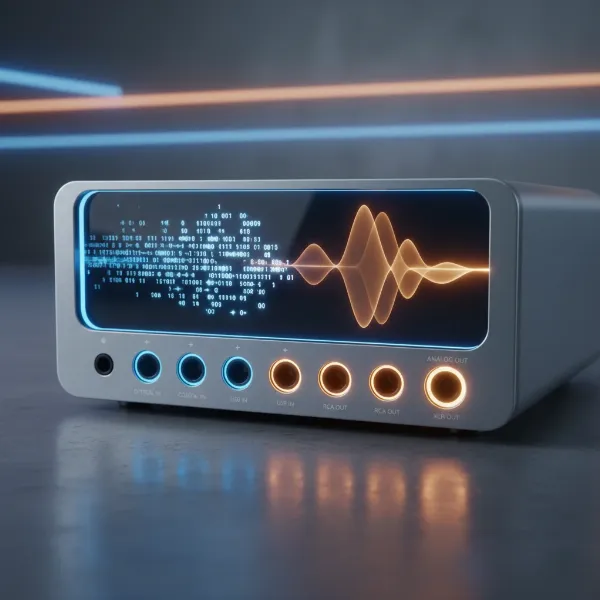 A high-quality external DAC converting digital audio to a pure analog signal.
What is a Headphone Amplifier?
While a DAC is responsible for converting the digital signal, a headphone amplifier (amp) takes the resulting low-level analog signal and boosts its power. This amplified signal is what truly “drives” your headphones, allowing them to reproduce sound at adequate listening levels with proper dynamics and impact. Think of it as providing the necessary muscle to make your headphones perform their best.
Just like DACs, most devices with a headphone jack also contain a built-in amplifier. These integrated amplifiers are typically designed to drive a wide range of consumer-grade headphones, which generally have lower impedance and higher sensitivity, meaning they don’t require much power. For casual listening with standard earbuds or easy-to-drive headphones, the built-in amp is often sufficient to achieve a comfortable volume.
However, when you use more demanding headphones—such as high-impedance studio monitors or planar magnetic headphones—the built-in amplifier in your phone or computer may simply not provide enough power. This often results in a sound that is quiet, lacks bass, sounds thin, or feels compressed and lifeless, even at maximum volume. A dedicated external headphone amplifier delivers the necessary current and voltage to properly drive these headphones, unlocking their full potential for loudness, dynamic range, clarity, and overall sonic performance.
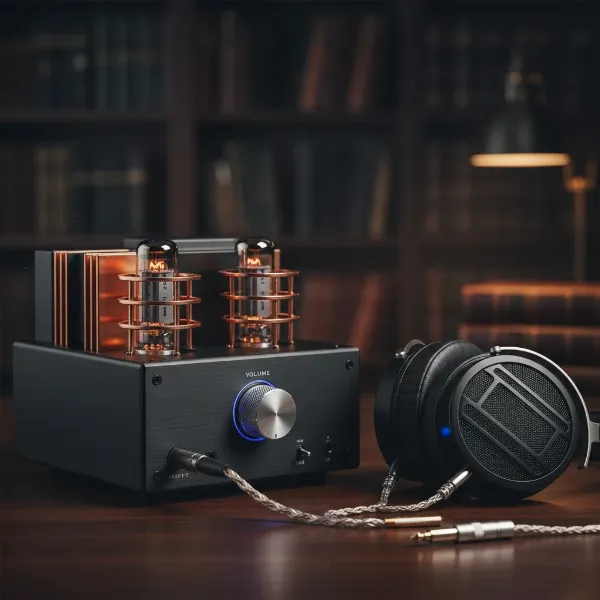 A dedicated headphone amplifier providing power to drive high-impedance headphones.
DAC vs. Amp: The Key Differences
The roles of a DAC and an amplifier are fundamentally distinct, yet interdependent in the audio chain. A DAC is primarily concerned with the quality of the signal conversion, transforming digital data into an analog waveform with precision and minimal distortion. It acts like a meticulous translator, ensuring that every piece of musical information is accurately represented in analog form.
An amplifier, by contrast, is focused on power delivery. It takes that delicate analog signal from the DAC and strengthens it, providing the necessary electrical current to make your headphones or speakers produce audible sound at your desired volume. If the DAC is the translator, the amplifier is the muscle, pushing the sound effectively to your transducers. You inherently need both functions in any digital audio system; the question is whether the integrated components in your source device are sufficient for your listening needs.
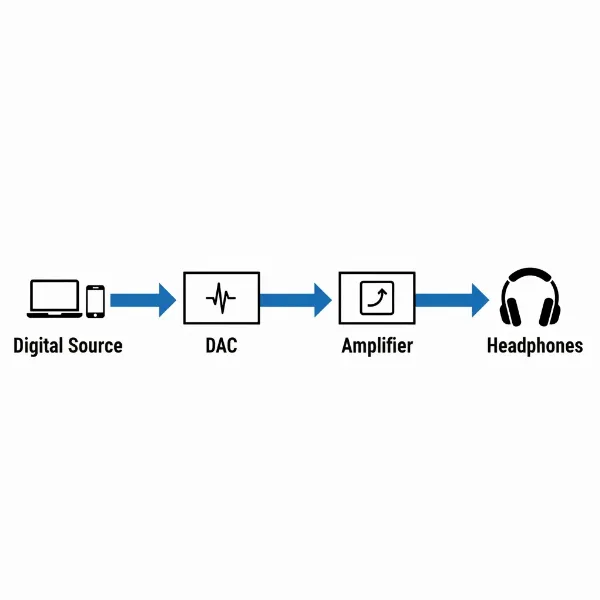 Diagram illustrating the audio signal flow from source, through DAC and amplifier to headphones.
Do You Actually Need a DAC and an Amp?
The decision to invest in separate DACs and amplifiers largely depends on your existing equipment, listening habits, and desired audio quality. For many casual listeners using basic headphones with a smartphone or laptop, the built-in DAC and amp are perfectly adequate. If your current setup sounds good to you, reaches comfortable volumes, and you don’t notice any obvious sound quality issues, you might not need external gear.
However, there are clear signs you might benefit from an upgrade:
- Low Volume or Lack of Headroom: If your headphones struggle to get loud enough, even at maximum volume from your device, or if the sound lacks impact and dynamics, an external amplifier is likely needed. This is especially true for headphones with higher impedance (e.g., 250 ohms or more) or low sensitivity ratings.
- Poor Sound Quality: You might notice a lack of clarity, muddy bass, harsh treble, or a general “flatness” to the sound. This could indicate limitations in your built-in DAC, which may be introducing noise or failing to accurately convert the digital signal.
- Using High-Resolution Audio: If you subscribe to high-resolution streaming services or listen to lossless audio files (FLAC, DSD), a high-quality external DAC is crucial to fully realize the benefits of these formats, as most built-in DACs cannot reproduce them faithfully.
- Critical Listening: For audiophiles, audio professionals, or anyone who values deep immersion and wants to hear every subtle detail in their music, dedicated components offer a significant step up in transparency, detail retrieval, and overall sound fidelity.
Ultimately, your headphones are the most critical component. A dedicated DAC and amp primarily enhance the performance of good headphones. If you’re using entry-level headphones, upgrading them first will likely yield a more noticeable improvement than adding external electronics.
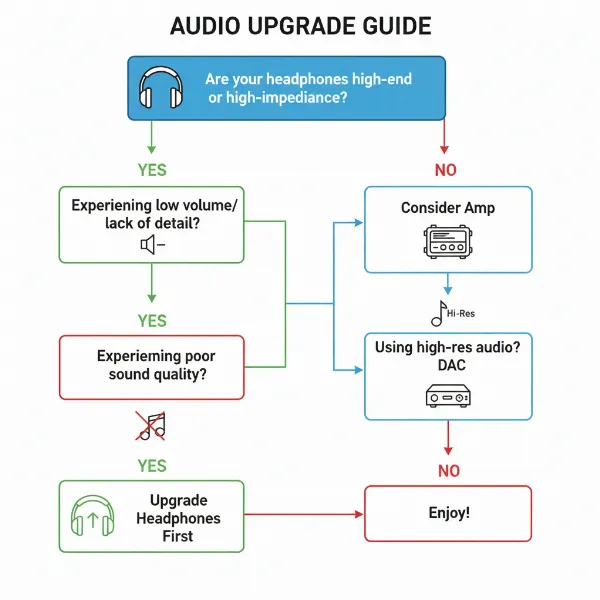 A decision flowchart for upgrading audio equipment based on headphone type and sound issues.
Understanding Headphone Impedance and Sensitivity
When considering a headphone amplifier, two technical specifications are paramount: impedance and sensitivity. These metrics directly influence how much power your headphones require to perform optimally.
- Impedance (measured in Ohms Ω): This refers to the electrical resistance of the headphone drivers. Headphones with low impedance (typically below 50Ω) are easy to drive and can be powered sufficiently by most smartphones and laptops. Headphones with high impedance (150Ω, 300Ω, 600Ω) require more voltage and power from an amplifier to reach adequate listening levels and achieve their full dynamic range.
- Sensitivity (measured in dB/mW or dB/V): This indicates how efficiently headphones convert electrical power into sound pressure. High-sensitivity headphones require less power to produce a given volume level. Low-sensitivity headphones, conversely, need more power to achieve the same loudness.
If you own high-impedance or low-sensitivity headphones, an external amplifier becomes almost essential. Without sufficient power, these headphones will sound quiet, lack bass, and fail to deliver the expansive dynamics they are capable of. Matching your headphones’ specifications with an appropriately powerful amplifier is key to unlocking their true potential.
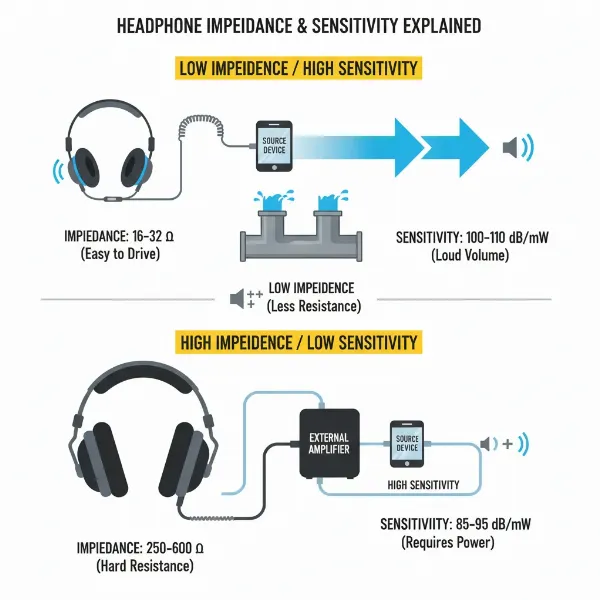 Visual representation of headphone impedance and sensitivity requiring proper amplifier matching.
Integrated DAC/Amp Combos: The Best of Both Worlds?
For many, the idea of managing two separate devices—a DAC and an amplifier—can seem cumbersome, especially for desktop setups or portable use. This is where integrated DAC/amp combos shine. These units combine both functions into a single chassis, offering a streamlined solution that simplifies your audio chain.
The primary advantages of DAC/amp combos include:
- Convenience: A single device means fewer cables, less clutter, and easier setup, making them ideal for minimalist desktop setups or on-the-go listening.
- Portability: Many combo units are designed to be compact and battery-powered, perfect for enhancing your smartphone or laptop audio quality while traveling.
- Cost-Effectiveness: Often, purchasing a good DAC/amp combo can be more economical than buying separate, equivalent quality DAC and amp units.
- Optimized Matching: Combo units are typically designed with perfectly matched DAC and amplifier stages, ensuring seamless synergy and optimal performance without the guesswork of pairing separate components.
However, dedicated separates can sometimes offer more advanced features, greater power output, or a higher degree of customization for audiophiles who want to fine-tune every aspect of their sound. For most users looking for a significant upgrade from their built-in audio, a high-quality DAC/amp combo provides an excellent balance of performance, convenience, and value.
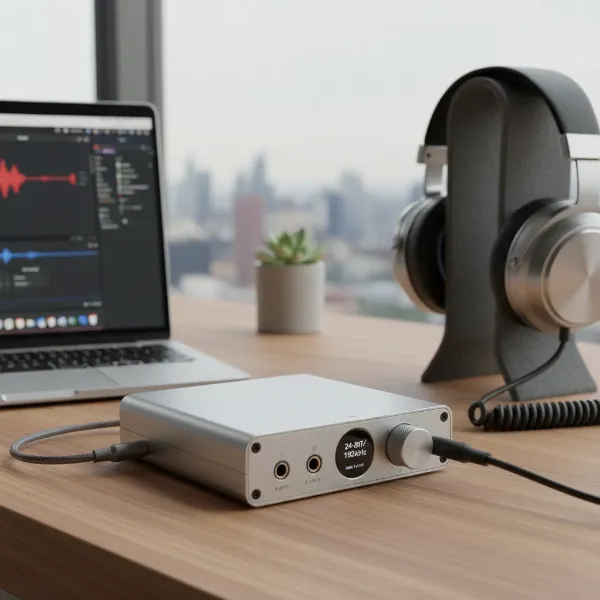 A compact, integrated DAC/amplifier combo unit for portable or desktop use.
How to Choose the Right DAC and/or Amp
Selecting the perfect DAC and/or amplifier requires thoughtful consideration of your personal needs, current gear, and listening environment. Here’s a comprehensive guide to help you make an informed decision:
Determine Your Usage Needs
Start by asking yourself: What is the primary purpose of this equipment?
- Music Listening: Are you an audiophile seeking the purest sound for critical listening sessions at home?
- Gaming: Do you need enhanced positional audio and clear communication for competitive gaming?
- Professional Work: Are you an audio engineer requiring accurate monitoring for mixing and mastering?
- Portability: Do you need a compact solution for improving audio on the go with your smartphone or laptop?
|
Our Picks for the Best headphone in 2026
As an Amazon Associate I earn from qualifying purchases.
|
||
| Num | Product | Action |
|---|---|---|
| 1 | Amazon Basics Hybrid Active Noise Cancelling Headphones, 35 Hours Playtime with ANC on and 45 Hours with ANC Off, Wireless, Over Ear Comfortable Fit, Bluetooth, One Size, Black |

|
| 2 | Soundcore by Anker Q20i Hybrid Active Noise Cancelling Headphones, Wireless Over-Ear Bluetooth, 40H Long ANC Playtime, Hi-Res Audio, Big Bass, Customize via an App, Transparency Mode (Pink) |
|
| 3 | Sony WH-CH720N Noise Canceling Wireless Headphones Bluetooth Over The Ear Headset with Microphone, Pink |
|
| 4 | Soundcore by Anker Q20i Hybrid Active Noise Cancelling Headphones, Wireless Over-Ear Bluetooth, 40H Long ANC Playtime, Hi-Res Audio, Big Bass, Customize via an App, Transparency Mode |
|
| 5 | Soundcore by Anker Q20i Hybrid Active Noise Cancelling Headphones, Wireless Over-Ear Bluetooth, 40H Long ANC Playtime, Hi-Res Audio, Big Bass, Customize via an App, Transparency Mode (White) |
|
| 6 | Amazon Basics On Ear Wired Computer Headset with Adjustable Microphone, 3.5mm Port or in-Line Control with USB-A Port, Foldable, Clear Sound, Small/Medium Size, Black |
|
| 7 | Soundcore by Anker Q20i Hybrid Active Noise Cancelling Headphones, Wireless Over-Ear Bluetooth, 40H Long ANC Playtime, Hi-Res Audio, Big Bass, Customize via an App, Transparency Mode |
|
| 8 | Sony WH-CH720N Noise Canceling Wireless Headphones Bluetooth Over The Ear Headset with Microphone and Alexa Built-in, White New |
|
| 9 | Amazon Basics Bluetooth On-Ear Headphones Wireless with Microphone, Deep Bass, 35 Hour Playtime, Foldable, Collapsible, Portable Travel Friendly, Black |
|
| 10 | Sony WH-CH720N Noise Canceling Wireless Headphones Bluetooth Over The Ear Headset with Microphone and Alexa Built-in, Black New |
|
Your usage will dictate the features and form factor you prioritize.
Consider Your Current Headphones
The headphones you own are the most critical factor.
- Impedance and Sensitivity: Check your headphones’ specifications. High-impedance (e.g., over 100 Ohms) or low-sensitivity headphones will almost certainly benefit from a dedicated amplifier. Easily driven headphones (e.g., below 50 Ohms, high sensitivity) might find less dramatic improvements from an amp but could still benefit from a cleaner DAC.
- Sound Signature: Are your headphones naturally warm, neutral, or bright? Some amplifiers or DACs might subtly enhance or alter the sound signature, so research how different components might complement or contrast your headphones.
Establish Your Budget
DACs and amplifiers range from affordable dongle DACs under $50 to high-end desktop stacks costing thousands.
- Entry-Level (Under $150): Often portable DAC/amp combos or basic desktop units that offer a noticeable improvement over onboard audio.
- Mid-Range ($150 – $500): Provides a significant jump in audio quality, power, and features, with excellent options for both separates and combos.
- High-End ($500+): Targets serious audiophiles seeking ultimate transparency, precise control, and specialized features.
Allocate your budget wisely, remembering that a balanced system (good headphones and good source/amp) often yields the best results.
Connectivity Options
Consider the inputs and outputs you need for your devices.
- Inputs:
- USB: Most common for connecting to computers, laptops, and many smartphones. Ensure compatibility (e.g., USB-C for newer Android phones, Lightning for iPhones with an adapter).
- Optical (TOSLINK) / Coaxial: Common for connecting to TVs, CD players, or dedicated music streamers.
- Bluetooth: For wireless convenience, look for DACs with high-quality Bluetooth codecs (e.g., LDAC, aptX HD).
- Outputs:
- 3.5mm / 6.35mm (1/4 inch): Standard headphone jacks.
- Balanced Outputs (2.5mm / 4.4mm / XLR): Offer better channel separation and power for compatible balanced headphones.
Form Factor
Decide whether you need a portable or desktop solution.
- Portable DAC/Amps: Compact, battery-powered, and designed for on-the-go use with smartphones or laptops. Ideal for travel or commuting.
- Desktop DAC/Amps: Larger, mains-powered units that typically offer more power, connectivity, and superior sound quality for home use. They can be all-in-one combos or separate units.
Read Reviews and Try if Possible
Before purchasing, read reviews from reputable audio publications and user forums. Pay attention to subjective descriptions of sound quality, build quality, and user experience. If possible, try to audition different DACs and amps with your own headphones to hear the difference firsthand. Personal preference plays a significant role in audio, and what sounds great to one person might not be ideal for another.
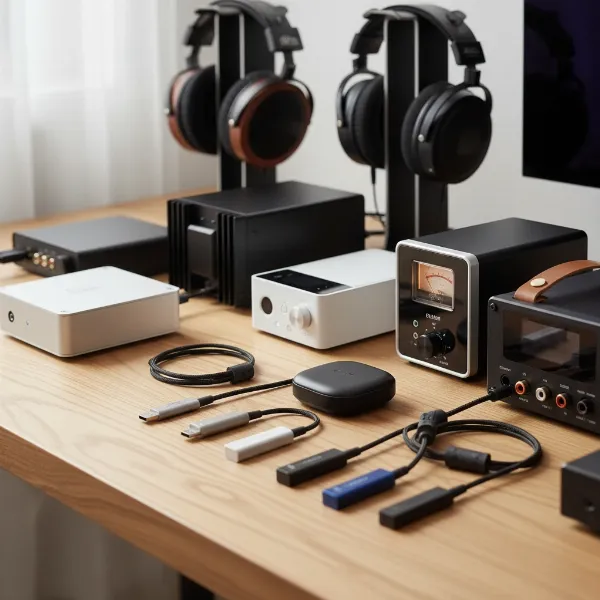 Various types of DACs, amplifiers, and combo units displayed for choice.
Conclusion
Navigating the world of DACs and amplifiers can seem daunting, but understanding their distinct roles—digital-to-analog conversion for clarity and power amplification for volume and dynamics—is the first step toward audio enlightenment. While every digital audio device has built-in versions of these components, dedicated external DACs and headphone amplifiers offer a significant upgrade, particularly for discerning listeners and those with high-performance headphones. They work in tandem to transform your digital music into a rich, detailed, and immersive analog sound that your headphones can truly sing with.
Ultimately, what you actually need depends on your current setup, the headphones you own, and your personal pursuit of sonic perfection. If you’re using high-impedance headphones, demand pristine audio quality, or find your music lacking detail and power, then investing in a dedicated DAC, an amplifier, or a convenient combo unit could be the missing link in your audio chain. Are you ready to hear your music the way it was truly meant to be heard?
Frequently Asked Questions
Do I need a DAC if my headphones are already good?
Yes, even excellent headphones can benefit from a dedicated DAC. While your headphones translate the analog signal into sound, a high-quality external DAC ensures that the analog signal itself is as pure and accurate as possible, free from the noise and distortion often introduced by built-in DACs in common devices.
Can I use a headphone amp without a DAC?
Yes, you can use a headphone amp without an external DAC if your audio source (like a portable music player or an audio interface) already has a decent DAC built-in and outputs an analog signal. The amplifier will then boost that analog signal for your headphones.
What is headphone impedance, and why does it matter?
Headphone impedance is the electrical resistance of the headphone’s drivers, measured in ohms (Ω). It matters because high-impedance headphones (e.g., 250Ω+) require more power (voltage) from an amplifier to reach adequate volume and dynamic performance compared to low-impedance headphones (e.g., <50Ω).
Are DAC/Amp combos as good as separates?
DAC/Amp combos offer excellent convenience, portability, and often cost-effectiveness, with performance that can rival entry-to-mid-tier separates. For high-end setups, dedicated separate DACs and amplifiers might offer superior performance, greater flexibility, and more specialized features.
Will a DAC or amp improve streaming quality from Spotify or Apple Music?
Yes, a good external DAC can improve the sound quality of streaming services like Spotify or Apple Music by providing a cleaner, more accurate conversion of the digital audio data, even if it’s not a lossless format. An amp ensures your headphones receive sufficient power for dynamic sound reproduction.