The world of audio technology is constantly evolving, introducing innovations that promise enhanced experiences and improved safety. Among these, bone conduction headphones have emerged as a unique alternative, captivating users with their open-ear design. This distinct approach to sound delivery raises a crucial question for many audiophiles and casual listeners alike: are bone conduction headphones truly safe for your ears, or do they pose hidden risks? This article delves into the mechanism, benefits, potential concerns, and best practices to ensure you can make an informed decision about these fascinating devices.
Understanding Bone Conduction Technology
Unlike traditional headphones that send sound waves through the air into your ear canal, bone conduction headphones operate on a different principle. They utilize transducers that rest on your cheekbones, just in front of your ears. These transducers convert audio signals into mechanical vibrations. These vibrations then travel through the bones of your skull, specifically your temporal bone, directly to your cochlea, or inner ear. This process entirely bypasses your outer and middle ear, delivering sound to your brain without ever entering your ear canal. This method of hearing has historical roots, with anecdotes like Beethoven using a rod clamped between his teeth and his piano to perceive music through bone vibrations as his hearing deteriorated. This ancient understanding of bone-conducted sound forms the foundation of today’s advanced bone conduction technology.
The Safety Advantages of Bone Conduction Headphones
Bone conduction headphones offer several compelling safety advantages that set them apart from traditional audio devices. These benefits primarily stem from their open-ear design, which keeps your ear canals unobstructed.
Situational Awareness
|
Our Picks for the Best headphone in 2026
As an Amazon Associate I earn from qualifying purchases.
|
||
| Num | Product | Action |
|---|---|---|
| 1 | Amazon Basics Hybrid Active Noise Cancelling Headphones, 35 Hours Playtime with ANC on and 45 Hours with ANC Off, Wireless, Over Ear Comfortable Fit, Bluetooth, One Size, Black |

|
| 2 | Sony WH-CH720N Noise Canceling Wireless Headphones Bluetooth Over The Ear Headset with Microphone and Alexa Built-in, White New |
|
| 3 | Soundcore by Anker Q20i Hybrid Active Noise Cancelling Headphones, Wireless Over-Ear Bluetooth, 40H Long ANC Playtime, Hi-Res Audio, Big Bass, Customize via an App, Transparency Mode |
|
| 4 | Soundcore by Anker Q20i Hybrid Active Noise Cancelling Headphones, Wireless Over-Ear Bluetooth, 40H Long ANC Playtime, Hi-Res Audio, Big Bass, Customize via an App, Transparency Mode (White) |
|
| 5 | Soundcore by Anker Q20i Hybrid Active Noise Cancelling Headphones, Wireless Over-Ear Bluetooth, 40H Long ANC Playtime, Hi-Res Audio, Big Bass, Customize via an App, Transparency Mode (Pink) |
|
| 6 | Sony WH-CH720N Noise Canceling Wireless Headphones Bluetooth Over The Ear Headset with Microphone, Pink |
|
| 7 | Soundcore by Anker Q20i Hybrid Active Noise Cancelling Headphones, Wireless Over-Ear Bluetooth, 40H Long ANC Playtime, Hi-Res Audio, Big Bass, Customize via an App, Transparency Mode |
|
| 8 | Amazon Basics Bluetooth On-Ear Headphones Wireless with Microphone, Deep Bass, 35 Hour Playtime, Foldable, Collapsible, Portable Travel Friendly, Black |
|
| 9 | Sony WH-CH720N Noise Canceling Wireless Headphones Bluetooth Over The Ear Headset with Microphone and Alexa Built-in, Black New |
|
| 10 | Amazon Basics On Ear Wired Computer Headset with Adjustable Microphone, 3.5mm Port or in-Line Control with USB-A Port, Foldable, Clear Sound, Small/Medium Size, Black |
|
Perhaps the most significant safety advantage is enhanced situational awareness. Because your ears remain open, you can hear your music or podcasts while simultaneously perceiving ambient sounds from your environment. This feature is particularly invaluable for outdoor enthusiasts like runners, cyclists, or pedestrians in urban areas. Being able to hear approaching traffic, warning shouts, or other environmental cues can significantly reduce the risk of accidents, making these headphones a preferred choice for activities where staying alert to your surroundings is paramount.
Ear Canal Health and Hygiene
Traditional in-ear headphones or earbuds can sometimes lead to issues such as ear infections, wax buildup, or discomfort from prolonged insertion into the ear canal. Bone conduction headphones eliminate these concerns entirely. By avoiding the ear canal, they promote better ear hygiene and reduce the risk of irritation or infection, making them a suitable option for individuals with sensitive ears or those prone to ear canal problems.
Addressing Conductive Hearing Loss
For individuals experiencing certain types of hearing loss, specifically conductive hearing loss where sound transmission through the outer or middle ear is impaired, bone conduction technology can offer a unique solution. By directly stimulating the cochlea via bone vibrations, these headphones can provide a clearer listening experience, bypassing the damaged parts of the ear. This can be a life-changing benefit, allowing some users to enjoy audio in ways previously inaccessible to them.
Potential Concerns and Side Effects
While bone conduction headphones present notable safety benefits, it is crucial to understand that they are not entirely without potential drawbacks. Like any audio device, responsible usage is key to minimizing risks.
Risk of Hearing Damage (Cochlea Strain)
A common misconception is that because bone conduction headphones bypass the eardrum, they eliminate the risk of hearing damage. However, this is not entirely true. The inner ear, or cochlea, is still the organ responsible for processing sound, regardless of whether it arrives via air or bone conduction. Listening at excessively high volumes for prolonged periods can strain the cochlea, potentially leading to noise-induced hearing loss. “Bone conduction headphones are not immune to causing harm to our cochlea,” as noted by audiological experts Dr. Cory Portnuff and Elliott Berger. The cochlea processes bone-conducted sound similarly to air-conducted sound, meaning these headphones do not inherently safeguard against hearing damage from loud volumes. Audiologists typically recommend keeping the volume at no more than 60-70% of the maximum to protect your hearing over time.
Discomfort and Headaches
Some users may experience discomfort or headaches, particularly during prolonged use or if the headphones have an improper fit. The constant vibration on the cheekbones can feel unusual for some, and a tight fit can exert excessive pressure on the skull. This discomfort is often more pronounced at higher volumes, where the vibrations become more intense. To mitigate this, ensuring a snug yet comfortable fit and taking regular breaks are crucial steps. Adjusting the position slightly or trying different models designed for better ergonomics can also help alleviate these issues.
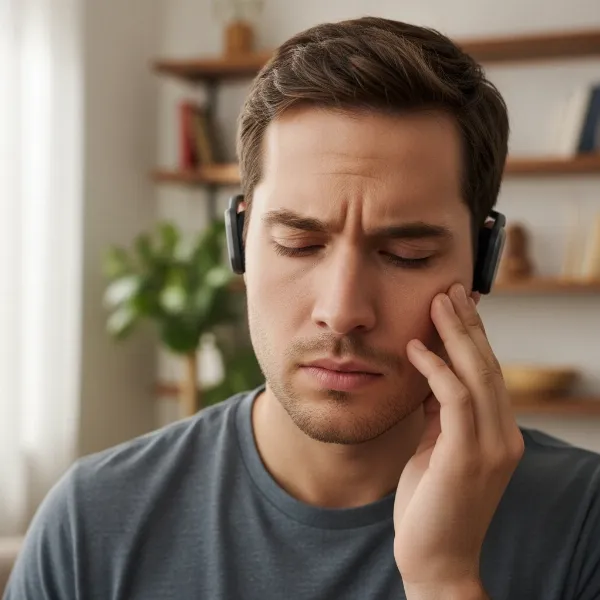 A person wearing bone conduction headphones experiencing slight discomfort on their cheekbones, indicating potential pressure points leading to headaches.
Tinnitus Exacerbation
While bone conduction headphones are safe for individuals with tinnitus when used responsibly, excessively high volumes over extended periods can potentially contribute to or exacerbate tinnitus symptoms. Tinnitus is often linked to damage to the auditory system, particularly the hair cells in the inner ear. When bone conduction headphones transmit powerful vibrations directly to the inner ear at high volumes, they can overstimulate these hair cells, increasing the risk of developing or worsening tinnitus. Users with pre-existing tinnitus should monitor their symptoms carefully and consult an audiologist if any changes occur.
Skin Irritation
As with any wearable device that makes direct contact with the skin, bone conduction headphones can cause irritation at the contact points. This is especially true for individuals with sensitive skin, allergies to certain materials (like rubber or silicone), or during prolonged use in sweaty conditions. Poor hygiene, such as not regularly cleaning the contact pads, can also contribute to skin issues. Choosing headphones made from hypoallergenic materials, keeping the contact areas clean and dry, and taking breaks to allow the skin to breathe can help prevent such irritations.
Rare Issues: Vertigo or Dizziness
In very rare instances, some users have reported experiencing vertigo or dizziness while using bone conduction headphones. These sensations are believed to be caused by the vibrations generated by the headphones or individual sensitivities. If such symptoms occur, it is important to discontinue use immediately and consult a healthcare professional for an evaluation.
Bone Conduction vs. Traditional Headphones: A Safety Comparison
Understanding the safety profiles of bone conduction headphones often involves comparing them to their traditional counterparts. Both have distinct characteristics that impact user safety differently.
| Feature | Bone Conduction Headphones | Traditional Headphones (In-ear/Over-ear) |
|---|---|---|
| Situational Awareness | Excellent; ears remain open to environmental sounds. | Limited; often block or cancel out ambient noise. |
| Ear Canal Health | Bypass ear canal; reduced risk of infections, wax buildup. | Can cause ear canal irritation, infections, or wax buildup with prolonged use. |
| Inner Ear (Cochlea) Impact | Can still be strained by high volumes; similar risk of noise-induced hearing loss. | Can be strained by high volumes; similar risk of noise-induced hearing loss. |
| Physical Discomfort | Potential for vibration discomfort, headaches from pressure on skull/cheekbones. | Potential for ear fatigue, pressure on ears/head, jaw discomfort. |
| Tinnitus Risk | High volumes can exacerbate or contribute to tinnitus. | High volumes can exacerbate or contribute to tinnitus. |
| Skin Irritation | Possible at contact points on cheekbones/temples. | Possible around/in ears (earcups, eartips). |
Tips for Safe and Enjoyable Bone Conduction Headphone Use
To maximize the benefits and minimize the potential drawbacks of bone conduction headphones, adopting a few best practices is highly recommended.
Maintain Moderate Volume Levels
This is the most critical rule for all headphone types. Keep your listening volume at a comfortable level, ideally below 70% of the maximum. Many smartphones and audio apps now offer features to monitor and limit sound exposure, which can be beneficial.
Take Regular Breaks
Even at moderate volumes, prolonged listening can lead to fatigue or discomfort. Give your ears and head a rest by taking short breaks every hour or two, especially during long listening sessions.
Ensure Proper Fit
A good fit is essential for both sound quality and comfort. Adjust the headphones so the transducers rest comfortably on your cheekbones, avoiding excessive pressure that could lead to headaches or irritation. Different models offer varying designs, so finding one that suits your head shape is important.
Keep Headphones Clean
Regularly clean the contact points of your headphones to prevent the buildup of sweat, dirt, and bacteria, which can cause skin irritation. Follow the manufacturer’s cleaning instructions to maintain hygiene.
Consult a Professional if Experiencing Issues
If you experience persistent discomfort, headaches, worsening tinnitus, vertigo, or skin irritation, discontinue use and consult a healthcare professional or an audiologist. They can provide personalized advice and rule out any underlying conditions.
> “While bone conduction headphones offer unique benefits for situational awareness, it’s vital to remember that the same principles of safe listening apply. Protecting your inner ear from excessive volume remains paramount.” – Dr. Emily Carter, Audiologist
Conclusion
Bone conduction headphones represent an exciting leap in audio technology, offering distinct advantages such as enhanced situational awareness and improved ear hygiene. They are generally considered safe for most users when employed responsibly. However, it is crucial to recognize that they do not provide immunity from hearing damage if used at excessively high volumes, as the delicate cochlea remains vulnerable. Potential side effects like vibration discomfort, headaches, or skin irritation can be managed with proper fit, moderate volume, and regular breaks. By understanding how these devices work and adhering to safe listening practices, you can confidently enjoy the unique benefits of bone conduction headphones while safeguarding your hearing health. Are you ready to experience audio differently, with your ears open to the world around you?
Frequently Asked Questions
Can bone conduction headphones cause hearing loss?
Yes, like any audio device, bone conduction headphones can cause hearing loss if used at excessively high volumes for prolonged periods. While they bypass the eardrum, the inner ear (cochlea) is still directly stimulated by vibrations and can be damaged by loud sounds. It is crucial to maintain moderate listening levels to protect your hearing.
Are bone conduction headphones bad for your brain?
There is no scientific evidence to suggest that bone conduction headphones are inherently bad for your brain. They transmit sound vibrations through the skull to the inner ear, which then sends signals to the brain. This is a natural physiological process. Any discomfort experienced, such as headaches, is typically localized to the contact points and not indicative of brain harm.
Do bone conduction headphones vibrate too much?
The sensation of vibration is a core characteristic of bone conduction technology. While some users adapt to it, others might find it uncomfortable, especially at higher volumes. If the vibration feels excessive or causes discomfort, reducing the volume, adjusting the fit, or taking breaks can help. Different models may also offer varying levels of vibration intensity.