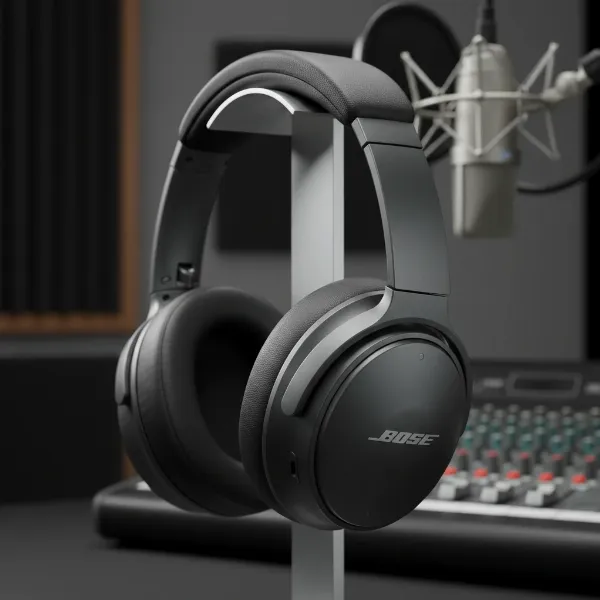
Imagine a world where your thoughts are the ultimate remote control, effortlessly commanding your audio experience. This isn’t a scene from a sci-fi movie; it’s the imminent reality ushered in by neural headphones. These revolutionary devices represent a groundbreaking fusion of brain-computer interface (BCI) technology and advanced sound engineering, promising to redefine how we interact with sound, manage our cognitive states, and engage with the digital world. Far beyond simple playback, neural headphones offer a glimpse into a future where our audio gear understands and responds to our inner landscape. This article delves into the fascinating mechanics, transformative applications, and exciting prospects of neural headphones, exploring how they are poised to revolutionize personal audio.
Exploring Headphone Categories with a Neural Lens
Traditional headphone types have long served distinct purposes, but the advent of neural technology offers a thrilling new dimension to each. As BCI capabilities become more sophisticated, these familiar forms could integrate powerful mind-reading features, transforming passive listening into an interactive, personalized experience.
Over-Ear Headphones and Neural Integration
Over-ear headphones, cherished for their immersive sound and superior comfort during extended listening sessions, provide ample space for advanced neural sensors. Their larger earcups can comfortably house the electroencephalography (EEG) electrodes needed to detect brainwave activity. In a neural future, these headphones could offer dynamic, thought-controlled active noise cancellation that adapts to your mental focus, or even adjust sound profiles based on your real-time emotional state, making your listening truly bespoke.
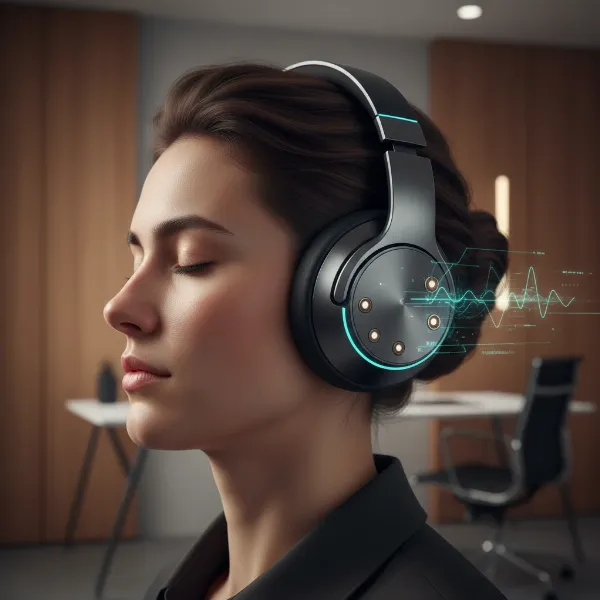 Over-ear neural headphones with visible EEG sensors for brainwave detection and immersive audio.
On-Ear Headphones and Emerging Neural Concepts
On-ear headphones strike a balance between portability and sound quality, sitting gently on the ear. While offering less real estate than their over-ear counterparts, innovative designs could still embed micro-EEG sensors within their compact frames. This form factor could become ideal for users seeking subtle neural feedback during commutes or work, perhaps offering alerts when focus wanes or automatically adjusting ambient sound based on mental workload.
In-Ear (Earbuds) and Micro-Neural Sensors
In-ear headphones, or earbuds, epitomize portability and discretion, making them a significant frontier for neural integration. Research into “EarEEG” demonstrates the potential to embed BCI technology directly into these tiny devices, collecting neural signals from within the ear canal. The challenge lies in miniaturization and maintaining signal accuracy, but successful implementation would offer an incredibly seamless and unobtrusive way to access mind-controlled audio and cognitive insights.
Noise-Cancelling Headphones with Neural Intelligence
Active noise-cancelling (ANC) headphones have transformed quiet listening, but neural intelligence could elevate this technology. Instead of merely blocking out external sounds, future neural ANC could interpret your cognitive state—such as deep concentration or stress—and dynamically adjust noise cancellation levels. This means your headphones could intuitively create an optimal sound environment for focus or relaxation, adapting to your brain’s needs in real-time without manual intervention.
Wireless Headphones and the Mind-Machine Connection
Wireless connectivity is fundamental to modern headphones, and it’s an indispensable component for neural headphones. Brain-computer interfaces inherently require wireless transmission to communicate neural data to a processing unit, often a smartphone or dedicated hub. Advanced wireless protocols like Bluetooth with aptX or LDAC will ensure both high-fidelity audio and reliable, low-latency transmission of complex neural signals, seamlessly bridging the gap between mind and machine.
How Neural Headphones Work: Decoding Brainwaves
At the heart of neural headphone technology lies the fascinating ability to interpret the brain’s electrical language. These devices move beyond simple audio playback, becoming sophisticated interfaces that understand your mental commands and cognitive states.
The Core Technology: Brain-Computer Interfaces (BCI)
Neural headphones are powered by Brain-Computer Interface (BCI) technology, which establishes a direct communication pathway between the brain and an external device. Unlike invasive BCIs that require surgical implants, neural headphones primarily utilize non-invasive methods, making them safe and accessible for everyday use. This technology enables users to control digital devices or applications purely through their thoughts.
EEG Sensors and Signal Interpretation
The primary mechanism for detecting brain activity in neural headphones involves electroencephalography (EEG) sensors. These tiny electrodes are typically integrated into the headphone’s earcups or headband, positioned to comfortably capture the faint electrical signals generated by your brain’s neurons. When you think, focus, or even relax, your brain produces distinct wave patterns (e.g., alpha, beta, theta waves).
Advanced algorithms and machine learning play a crucial role in interpreting these EEG signals. They analyze the raw brainwave data, filtering out noise and identifying specific patterns associated with desired commands or cognitive states. For example, a particular brainwave pattern might be linked to the “increase volume” command, while another indicates a state of deep focus. Over time, these AI systems can learn and adapt to an individual’s unique brainwave signatures, enhancing accuracy and personalization.
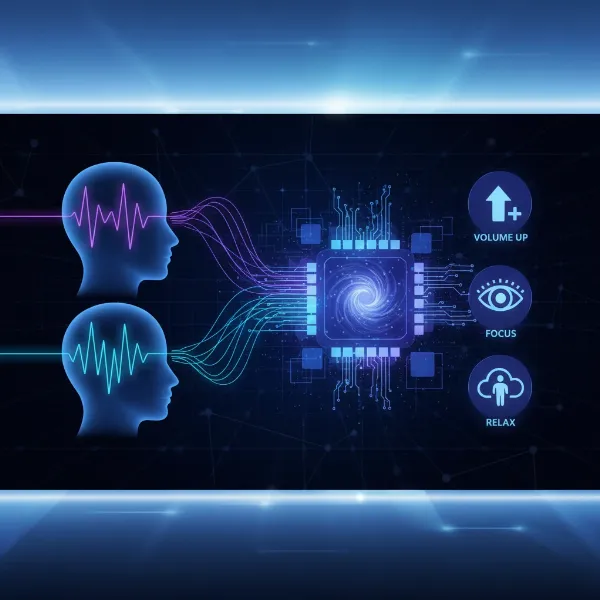 Diagram illustrating EEG sensors capturing brainwave signals and AI algorithms interpreting them for BCI.
Transformative Applications of Neural Headphones
The implications of neural headphones extend far beyond mere audio enjoyment, promising profound changes in how we interact with technology, manage our well-being, and even enhance our cognitive abilities.
Mind-Controlled Audio and Device Interaction
One of the most immediate and captivating applications is the ability to control audio playback with your thoughts. Imagine adjusting volume, skipping tracks, or pausing your music simply by thinking the command, eliminating the need for physical buttons or voice prompts. This hands-free control can also extend to other smart devices, allowing you to manage your connected environment with unprecedented ease. “This seamless integration of mind and machine relies on advanced algorithms and machine learning to accurately interpret neural signals,” notes a leading tech review.
Cognitive Enhancement and Mental Wellness
Neural headphones are poised to become powerful tools for mental well-being and productivity. Many models incorporate neurofeedback tools that track focus, relaxation levels, and stress in real-time. By providing immediate insights into your cognitive state, these devices can help users understand and improve their mental performance. For instance, some neural headphones can detect when your focus declines and proactively suggest taking a break, assisting in burnout management. Furthermore, they show promise in therapeutic applications, delivering customized audio experiences designed to alleviate symptoms of anxiety, depression, or improve sleep patterns.
Immersive Entertainment and Gaming
For gamers and entertainment enthusiasts, neural headphones could unlock new levels of immersion. Imagine audio environments that dynamically adapt to your emotional responses within a game, intensifying tension or amplifying moments of triumph based on your brain activity. Beyond adaptive sound, these devices could offer novel control schemes, allowing players to perform in-game actions or navigate menus with subtle mental commands, making the virtual world feel even more like an extension of your own mind.
Key Considerations in Neural Headphone Development
While the promise of neural headphones is immense, their development and adoption hinge on several critical factors, balancing cutting-edge technology with practical user needs.
Sound Quality and Neural Integration
For any audio device, pristine sound quality remains paramount. Neural headphone developers face the challenge of integrating complex BCI hardware without compromising on acoustic performance. This means ensuring high-fidelity drivers, effective noise cancellation, and rich spatial audio capabilities coexist harmoniously with EEG sensors and processing units. The goal is an unparalleled audio experience that is enhanced, not hindered, by neural capabilities.
Comfort and Wearability
Integrating sophisticated sensors and electronics into headphones without sacrificing comfort is crucial for widespread adoption. Neural headphones must be designed for long-term wear, ensuring that materials are lightweight, earcups apply appropriate pressure, and headbands are ergonomically shaped. The presence of sensors should be unobtrusive, allowing users to forget they are wearing advanced neurotechnology.
Data Privacy and Security
The collection and interpretation of brainwave data raise significant privacy and security concerns. Neural signals are highly personal and could offer insights into an individual’s cognitive patterns, emotional states, and even thoughts. Robust encryption, transparent data handling policies, and stringent security protocols are essential to build user trust and protect this extremely sensitive information from unauthorized access or misuse.
Battery Life and Connectivity
The advanced processing required for BCI, coupled with high-quality audio playback and wireless transmission, demands substantial power. Optimizing battery life will be a continuous challenge, ensuring that neural headphones can support extended periods of use without frequent recharging. Reliable and low-latency wireless connectivity, typically via advanced Bluetooth standards, is also vital for seamless interaction and real-time brainwave data transmission.
Current Innovations and Leading Models
The field of neural headphones is rapidly evolving, with several pioneering companies already bringing innovative products to the market or showcasing groundbreaking prototypes. These early models are providing a tangible glimpse into the future of mind-controlled audio.
Companies like Neurable have emerged as frontrunners in this space, notably partnering with premium audio brands like Master & Dynamic to introduce consumer-grade BCI-enabled headphones. Their MW75 Neuro headphones, for instance, integrate AI-powered EEG sensors into the ear pads. These sensors capture and analyze brain signals to provide users with detailed insights into their focus levels and help manage burnout. The accompanying Neurable app offers brain trend summaries and personalized productivity tips, prompting users to take breaks when concentration wanes. This blend of high-fidelity audio and cognitive monitoring sets a new standard for intelligent personal audio devices.
Another exciting innovation comes from Earable Neuroscience, with their Frenz Brainband. This headset focuses on tracking real-time brain activity and neurofeedback to deliver personalized digital therapeutics designed to aid sleep. By using bone conduction technology to play music, it aims to provide a less intrusive and more comfortable experience for users trying to relax or sleep. Meanwhile, Vital Neuro is exploring how EEG-enabled headphones can generate personalized neuroresponsive music in real-time for brain state management, with clinically validated results for anxiety, stress, and focus. These examples highlight a growing trend towards headphones that not only deliver sound but also actively engage with and respond to the user’s mind.
Conclusion
Neural headphones stand at the forefront of an exciting new era for audio technology, transforming our listening experience from passive reception to active, mind-controlled interaction. By integrating sophisticated Brain-Computer Interface technology with high-fidelity sound, these devices offer an unprecedented level of personalization and control. From enabling thought-driven music playback and device interaction to providing powerful tools for cognitive enhancement, mental wellness, and immersive entertainment, the potential applications are truly vast.
While challenges such as data privacy, comfort, and battery life remain, ongoing research and development from innovators like Neurable and Earable Neuroscience are rapidly pushing the boundaries of what’s possible. As these technologies mature, neural headphones promise not just an upgrade to our audio gear, but a fundamental shift in how we connect with our digital world and understand our own minds. Are you ready to experience a new dimension of sound, where your thoughts shape your auditory reality?
Frequently Asked Questions
What are neural headphones?
Neural headphones are advanced audio devices that integrate Brain-Computer Interface (BCI) technology, typically using EEG (electroencephalography) sensors, to detect and interpret a user’s brainwave activity. This allows for mind-controlled audio commands, cognitive state tracking, and personalized sound experiences.
How do neural headphones work?
Neural headphones work by embedding EEG sensors, often in their earcups, to capture the electrical signals produced by the brain. These signals are then analyzed by AI and machine learning algorithms, which translate specific brainwave patterns into commands (like changing volume) or provide insights into cognitive states such as focus, relaxation, or stress.
Are neural headphones safe?
Yes, current neural headphones for consumers use non-invasive BCI technology, meaning they do not require surgery or direct contact with the brain. They primarily rely on external EEG sensors to read brain signals, which is generally considered safe. However, data privacy is a significant consideration due to the personal nature of brainwave data.
What are the main benefits of neural headphones?
The primary benefits include hands-free mind-controlled audio playback and device interaction, enhanced cognitive performance through real-time focus and mood tracking, stress and burnout management, and personalized therapeutic audio experiences for mental wellness. They offer a deeper, more intuitive interaction with technology.
When will neural headphones be widely available?
Some consumer-grade neural headphones, such as Neurable’s MW75 Neuro and Earable Neuroscience’s Frenz Brainband, are already available or pre-orderable, with wider distribution expected in the near future. As the technology continues to advance and become more affordable, broader market availability is anticipated within the next few years.