Are you tired of the incessant roar of airplane engines, the chatter of fellow passengers, or the general hustle and bustle that often accompanies travel? Imagine a world where you can simply escape into your own bubble of tranquility, enjoying your favorite music, podcasts, or simply profound silence, no matter how chaotic your surroundings. This dream becomes a reality with a pair of high-quality noise-cancelling headphones. Designed to actively eliminate disruptive sounds, these devices are a traveler’s best friend, transforming noisy journeys into peaceful retreats. In this comprehensive guide, we’ll delve into the world of noise-cancelling headphones, exploring their types, essential features, and revealing the top 5 models that promise to elevate your travel experience.
Understanding Different Headphone Types for Travel
When choosing headphones for travel, the form factor plays a significant role in comfort, portability, and noise isolation. Primarily, travelers opt for either over-ear or in-ear designs.
Over-Ear Headphones
Over-ear headphones fully enclose your ears, creating a physical barrier against external sounds even before active noise cancellation (ANC) kicks in. This design typically offers the most effective noise cancellation and superior sound quality due to larger drivers and a more immersive listening experience. They are known for their comfort during extended wear, making them ideal for long-haul flights or train journeys.
- Pros: Best noise cancellation, excellent sound quality, high comfort for long periods, often feature larger batteries.
- Cons: Bulkiest and heaviest option, may cause ears to warm up, less portable than earbuds.
- Best for: Travelers prioritizing ultimate quiet, immersive audio, and comfort on extended trips. On-ear headphones, while more compact than over-ear, often provide less passive noise isolation and can become uncomfortable sooner, making them less ideal for demanding travel environments.
In-Ear Headphones (Earbuds)
In-ear headphones, or earbuds, are compact and fit directly into your ear canal. While their ANC capability has significantly improved, it generally doesn’t match the passive and active isolation of premium over-ear models, especially for consistent low-frequency noise. However, their portability is unmatched, making them convenient for light travelers or those who need to quickly stash their audio gear.
- Pros: Extremely portable and lightweight, discreet, can be very comfortable for many users, often come with charging cases extending battery life.
- Cons: Generally less effective ANC than over-ear, smaller drivers might impact soundstage, can cause ear fatigue for some after prolonged use.
- Best for: Commuters, light packers, or travelers who value ultimate portability and convenience for shorter journeys.
How Noise-Cancelling Technology Works
Active Noise Cancellation (ANC) is the magic behind these travel companions. Unlike passive noise isolation which relies on physical barriers, ANC uses advanced technology to actively combat ambient sound.
The Science Behind Active Noise Cancellation
ANC headphones utilize tiny microphones to pick up surrounding low-frequency noise, such as engine hums or air conditioning. They then generate an “anti-noise” sound wave that is 180 degrees out of phase with the incoming noise. When these two sound waves meet, they cancel each other out, significantly reducing or eliminating the unwanted noise reaching your ears. This technology is particularly effective against consistent, low-frequency sounds, which are prevalent in airplanes, trains, and busy offices.
Beyond simply blocking noise, many modern ANC headphones include:
- Transparency Mode (or Ambient Sound Mode): This feature allows selected outside sounds to pass through, enabling you to hear announcements, conversations, or traffic without removing your headphones. It’s invaluable for staying aware of your surroundings, like when listening for a boarding call at the airport.
- Adaptive ANC: Some advanced models can automatically adjust the level of noise cancellation based on your environment, optimizing performance whether you’re on a noisy plane or a quiet cafe.
Essential Factors When Choosing Travel Headphones
Selecting the perfect pair of noise-cancelling headphones for your journeys involves considering several critical aspects that go beyond just noise cancellation.
1. Noise Cancellation Performance
The primary reason to invest in these headphones is their ability to silence the world around you. Look for models renowned for their strong ANC, particularly against persistent low-frequency sounds common in travel. Reviews often highlight how well headphones block out airplane engines, train rumble, and general crowd noise. Effective ANC should create a noticeable quiet cocoon without introducing a feeling of “pressure” in your ears.
2. Comfort for Long Periods
Travel, especially long flights, demands headphones that remain comfortable for hours on end. Key comfort factors include:
- Earcup Material and Padding: Soft, breathable materials like memory foam or plush leather/velour prevent discomfort and sweating.
- Headband Design: A well-padded, adjustable headband distributes weight evenly across your head, avoiding pressure points.
- Weight: Lighter headphones are generally more comfortable for prolonged use.
- Clamping Force: The grip of the headphones should be secure enough to stay put but not so tight as to cause discomfort.
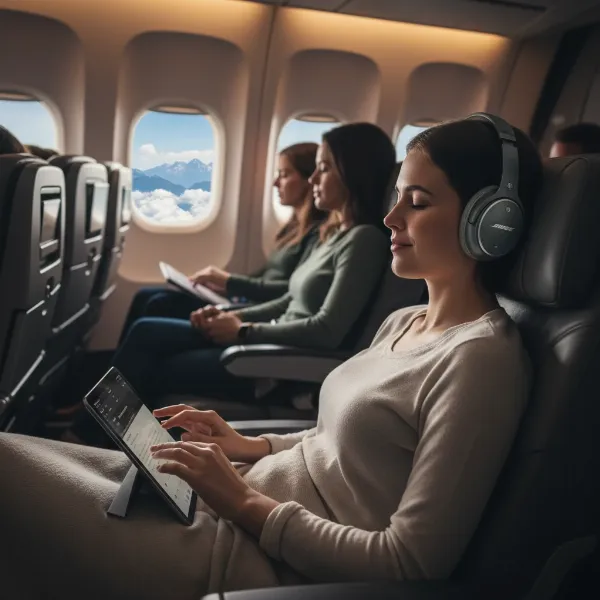 A person comfortably wearing over-ear noise-cancelling headphones on an airplane during a long flight, enjoying peace.
3. Sound Quality
While noise cancellation is paramount, excellent sound quality enhances your travel entertainment. Consider:
- Audio Balance: A balanced sound profile ensures that bass, mids, and treble are clear and well-represented without overpowering each other.
- Detail and Clarity: The ability to hear subtle nuances in your music or dialogue.
- Soundstage: A spacious soundstage creates an immersive listening experience. Some headphones offer spatial audio features for an even more engaging sound.
4. Battery Life and Charging
Long trips require impressive battery longevity. Look for headphones offering at least 25-30 hours of battery life with ANC enabled. Fast charging capabilities and convenient charging options (like USB-C) are also valuable features for travelers. Some models offer pass-through audio when charging, or even wired listening options, which can be a lifesaver if your battery dies.
5. Portability and Design
Travel headphones should be easy to pack and carry. Features that enhance portability include:
- Foldable Design: Many over-ear headphones can fold compactly into their carrying case.
- Durable Case: A robust travel case protects your investment from bumps and scrapes in your luggage.
- Compact Size: For earbuds, a small charging case is a huge plus.
6. Connectivity and Additional Features
Modern headphones offer a host of features that enhance the user experience:
- Bluetooth Connectivity: Latest Bluetooth versions (e.g., Bluetooth 5.2 or newer) offer stable connections and better power efficiency. Support for high-quality audio codecs like aptX Adaptive or LDAC is a bonus.
- Bluetooth Multipoint: This allows simultaneous connection to two devices (e.g., your phone and laptop), enabling seamless switching between them.
- Built-in Microphone: Essential for clear calls during your travels.
- Companion App: Often provides customization options for EQ, ANC levels, and firmware updates.
Top 5 Noise-Cancelling Headphones for Travel and Flights
After extensive research and expert reviews, here are our top picks for noise-cancelling headphones that excel in travel scenarios. These models offer a blend of superior ANC, comfort, sound quality, and battery life, making them ideal companions for any journey.
1. Sony WH-1000XM6
The Sony WH-1000XM6 are widely considered the gold standard for noise-cancelling headphones, consistently delivering an exceptional all-around experience. They combine industry-leading ANC with superb sound quality, making them a favorite for frequent flyers.
- Pros: Unrivaled noise cancellation, highly detailed and dynamic sound, excellent comfort for long wear, robust battery life (around 30 hours), foldable design, effective call quality.
- Cons: Case can be a bit bulky, no aptX HD support.
- Best for: Travelers seeking the absolute best combination of noise cancellation, audio fidelity, and smart features.
2. Bose QuietComfort Ultra Headphones (2nd Gen)
Bose has been a pioneer in noise cancellation, and the QuietComfort Ultra Headphones (2nd Gen) continue this legacy with intensely effective ANC and signature Bose comfort. They are specifically engineered to block out distractions, creating a remarkably quiet environment.
- Pros: Top-tier noise cancellation that’s among the best, incredibly comfortable earcups and headband, smart folding design, improved spatial audio for immersive movie watching, 30-hour battery life.
- Cons: Sound quality, while very good, might be marginally less transparent than some rivals; wired listening requires battery.
- Best for: Users prioritizing extreme noise blocking and plush comfort above all else, especially on noisy flights.
3. Sennheiser Momentum 4
The Sennheiser Momentum 4 stand out with their incredible battery life and high-quality audio, making them perfect for marathon travel sessions where recharging isn’t always an option. They offer a refined listening experience with powerful ANC.
- Pros: Phenomenal battery life (up to 60 hours with ANC), balanced and dynamic sound signature, comfortable over-ear design, sleek aesthetics.
- Cons: Not as compact when folded as some competitors, ANC is strong but perhaps not as intensely isolating as Bose or Sony’s absolute best.
- Best for: Travelers on exceptionally long journeys who demand extended listening without frequent recharges, alongside premium sound.
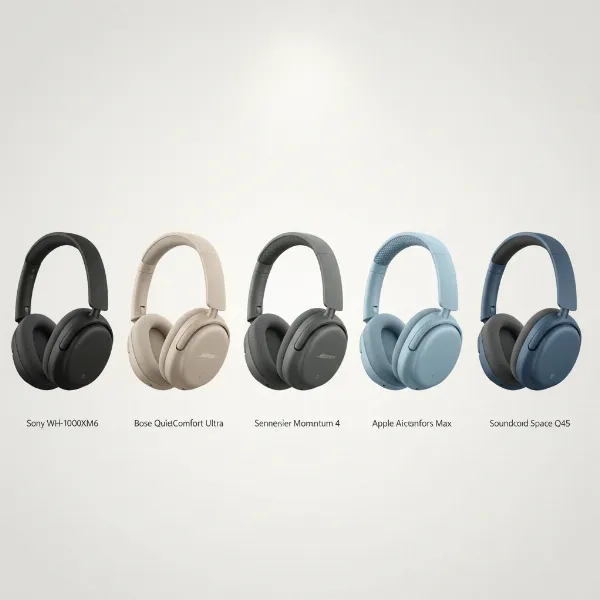 A visual comparison display of the top 5 noise-cancelling headphones for travel, showcasing different models.
4. Apple AirPods Max
For Apple ecosystem users, the AirPods Max offer seamless integration, premium build quality, and formidable active noise cancellation. Their distinctive design and rich audio experience cater specifically to Apple device owners.
- Pros: Exceptional noise cancellation, superior build quality with a premium feel, deep integration with Apple devices (instant pairing, automatic switching), impressive spatial audio.
- Cons: Heaviest option, can feel weighty during extended wear, high price point, smart case doesn’t fully protect, sound quality can feel a little flat in bass at times.
- Best for: Apple users who value seamless connectivity, premium aesthetics, and robust noise cancellation within their existing device ecosystem.
5. Soundcore Space Q45 Noise Cancelling Headphones
The Soundcore Space Q45 headphones present an outstanding budget-friendly option, delivering performance that punches well above their price point. They offer effective noise cancellation and respectable sound for travelers on a tighter budget.
- Pros: Excellent value for money, strong noise cancellation for the price, very comfortable for extended wear, impressive battery life (up to 50 hours), customizable EQ via app, dual device connectivity.
- Cons: ANC isn’t top-tier compared to premium models, can feel warm in hotter climates, carrying case isn’t the smallest.
- Best for: Budget-conscious travelers who need reliable noise cancellation and comfort without breaking the bank.
Comparison Table: Top Noise-Cancelling Headphones for Travel
| Headphone Model | ANC Performance | Comfort (1-5, 5=best) | Battery Life (ANC On) | Portability | Key Highlight | Price Range (Approx.) | Form Factor |
|---|---|---|---|---|---|---|---|
| Sony WH-1000XM6 | Excellent | 4.5 | 30 hours | Good (Foldable) | Best overall ANC & Sound | $350-$400 | Over-Ear |
| Bose QuietComfort Ultra Headphones | Exceptional | 5 | 30 hours | Good (Foldable) | Unmatched noise blocking & comfort | $400-$450 | Over-Ear |
| Sennheiser Momentum 4 | Very Good | 4 | 60 hours | Fair | Best battery life for long journeys | $250-$350 | Over-Ear |
| Apple AirPods Max | Excellent | 3 (due to weight) | 20 hours | Fair | Seamless Apple ecosystem integration | $450-$550 | Over-Ear |
| Soundcore Space Q45 | Good | 4 | 50 hours | Good | Best budget-friendly performance | $100-$150 | Over-Ear |
Comprehensive Buying Guide: Choosing Your Ideal Travel Headphones
With so many excellent options available, finding the perfect noise-cancelling headphones can feel overwhelming. This buying guide will walk you through the process, ensuring you make an informed decision tailored to your specific travel needs.
1. Define Your Usage Needs
Start by considering how and where you’ll primarily use your headphones:
- Purpose: Are they mainly for long flights, noisy commutes, working in cafes, or simply relaxing?
- Music Preference: Do you prefer bass-heavy music, detailed acoustics, or balanced sound for podcasts?
- Essential Features: Do you need top-tier ANC, excellent call quality, transparency mode, or multi-device connectivity?
2. Set Your Budget
Noise-cancelling headphones span a wide price range. Determine how much you’re willing to invest:
- Entry-level ($100-$200): Offers decent ANC and good sound for casual travelers.
- Mid-range ($200-$350): Provides significantly improved ANC, better sound, and premium features.
- High-end ($350+): Delivers industry-leading ANC, exceptional audio, superior comfort, and advanced features.
3. Research Reputable Headphone Brands
Familiarize yourself with established brands known for their audio quality and ANC technology. Sony and Bose are often at the forefront, but Sennheiser, Apple, and even Soundcore offer compelling alternatives across different price points. Understanding each brand’s strengths can guide your decision.
4. Read Expert Reviews and User Comparisons
Before making a purchase, consult independent reviews from reputable audio publications and tech websites. Pay attention to feedback regarding noise cancellation effectiveness in real-world travel scenarios, long-term comfort, and overall sound signature. User reviews on retail sites can also offer insights into durability and customer satisfaction.
5. Try Headphones On Directly (If Possible)
If circumstances allow, visit a local electronics store to try on different models. Comfort is highly subjective, and what feels great to one person might not to another. Pay attention to the fit of the earcups, the pressure of the headband, and the overall weight. This step is crucial for ensuring comfort on long journeys.
6. Purchase from Authorized and Reputable Retailers
Always buy your headphones from authorized dealers or reputable retailers. This ensures you receive a genuine product, benefit from warranty coverage, and have access to reliable customer service if needed. Verify return and exchange policies before finalizing your purchase.
“Choosing the right noise-cancelling headphones can truly redefine your travel experience, transforming potential stress into moments of peaceful enjoyment.” – Dr. Anya Sharma, Audio Ergonomics Specialist
Conclusion
Noise-cancelling headphones are no longer a luxury but a necessity for modern travelers seeking tranquility amidst the chaos. From the deep hum of an airplane engine to the chatter of a busy train station, these technological marvels create a personal oasis of calm, allowing you to immerse yourself in your audio or simply enjoy silence. We’ve explored the differences between over-ear and in-ear options, delved into the science of ANC, and highlighted the critical factors—from comfort to battery life—that should guide your choice. Whether you opt for the industry-leading performance of Sony, the unparalleled quiet of Bose, the marathon battery life of Sennheiser, the seamless Apple integration of AirPods Max, or the incredible value of Soundcore, there’s a perfect pair waiting to elevate your next journey.
So, which noise-cancelling headphones will you choose to embark on your next serene adventure?
Frequently Asked Questions
How do noise-cancelling headphones work on an airplane?
Noise-cancelling headphones use microphones to detect low-frequency ambient sounds, like airplane engine hums. They then generate an opposing sound wave that cancels out the external noise, providing a much quieter listening environment during flights.
Are noise-cancelling earbuds effective for travel?
Yes, noise-cancelling earbuds can be quite effective for travel, especially for their portability. While over-ear headphones often offer superior noise cancellation against constant low-frequency noise, premium earbuds like the Bose QuietComfort Ultra Earbuds provide impressive ANC in a much smaller form factor, ideal for lighter packing.
What is the ideal battery life for travel headphones?
For travel, an ideal battery life for noise-cancelling headphones is generally 25-30 hours with ANC enabled. This duration ensures they can last through even the longest international flights or multiple shorter trips without needing a recharge, providing continuous quiet and entertainment.
Is comfort more important than sound quality for travel headphones?
For travel headphones, comfort for long periods is often considered more important than absolute audiophile-grade sound quality. While good sound is desirable, discomfort during an 8-hour flight can significantly detract from the experience, making wearability a top priority.
Can noise-cancelling headphones completely block out all sound?
No, noise-cancelling headphones cannot completely block out all sound. They are most effective against consistent, low-frequency noises (like engine hums). High-frequency sounds, sudden noises, and voices are reduced but typically not entirely eliminated.
What is Transparency Mode and why is it useful for travelers?
Transparency Mode (or Ambient Sound Mode) allows outside sounds to filter through your headphones, enabling you to hear your surroundings without removing them. For travelers, this is crucial for listening to airport announcements, conversing with flight attendants, or maintaining situational awareness while navigating busy environments.
Are wireless noise-cancelling headphones safe to use during takeoff and landing?
Yes, wireless noise-cancelling headphones are generally safe to use during takeoff and landing, as long as your airline permits the use of Bluetooth devices in “airplane mode.” Most modern headphones comply with aviation safety regulations, but it’s always best to follow your flight crew’s instructions.